
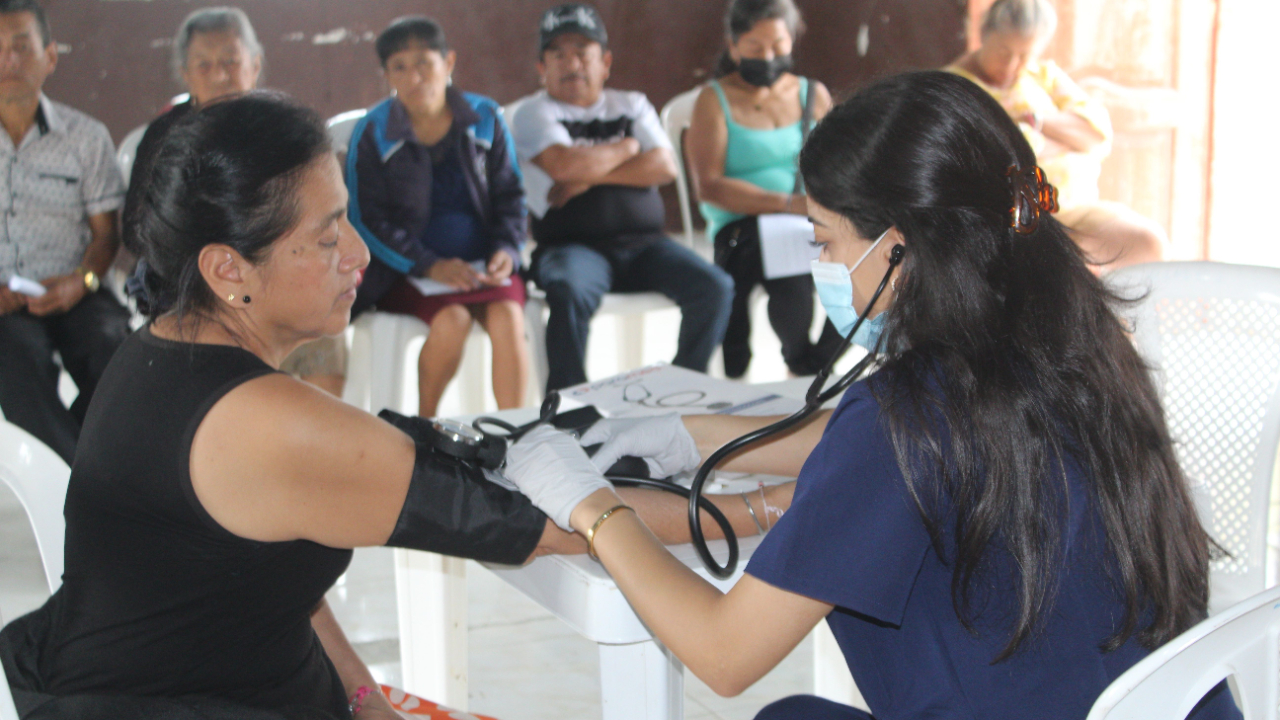
World Hypertension Day: The Silent Killer FIMRC Volunteers Face Daily
May 22, 2026A woman in Bududa has had headaches for months. She assumes it is exhaustion, she wakes before sunrise, tends to her crops, cooks, cleans, and cares for four children. She has never had her blood pressure checked.
In Huancayo, a man in his forties has not seen a doctor in years. The nearest clinic is a long journey from his village, and there is always something more urgent than a body that still mostly works.
These are not edge cases. They are the norm. And they are exactly why World Hypertension Day, observed every May 17, exists.
Hypertension affects an estimated 1.4 billion people worldwide. It produces no pain, no obvious warning signs, and no dramatic moment of onset. It simply accumulates, quietly raising the risk of heart attack, stroke, and kidney failure — until the damage is done. Only one in four people with high blood pressure have it under control.
In the communities where FIMRC operates, that gap is wider still.
What "Silent" Really Means in a Low-Resource Setting
In high-income settings, hypertension management is almost routine. Annual checkups, accessible pharmacies, digital blood pressure monitors available at every pharmacy. The infrastructure exists to catch the problem early.
Strip that infrastructure away and "silent" takes on a different meaning.
In Bududa, Uganda, rural health posts serve entire districts with skeletal staffing. In highland communities around Huancayo, Peru, altitude compounds cardiovascular stress in populations that may never have had a screening. In Costa Rica and Ecuador, the inequities between urban and rural health access create invisible dividing lines, between those who know their numbers and those who never will.
FIMRC volunteers step into those gaps. Not as fixers, but as consistent, trained, community-embedded presences that extend the reach of health systems that cannot stretch far enough on their own.
The Work on the Ground
FIMRC's Global Health Volunteer Program (GHVP) places volunteers across all four project sites: Peru, Uganda, Costa Rica, and Ecuador, working directly alongside local healthcare teams on community-based chronic disease prevention.
In practice, that looks like this:
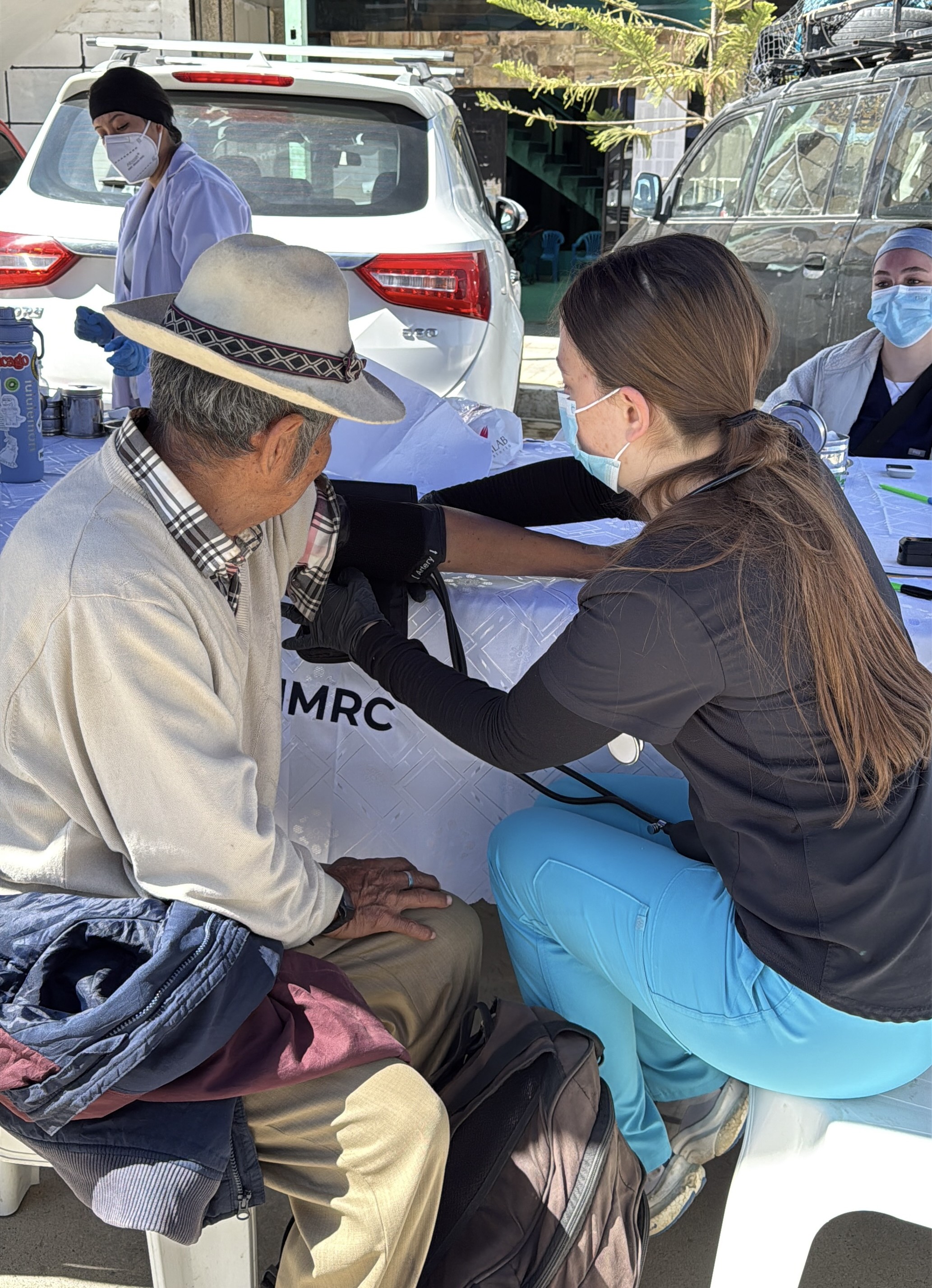
- Blood pressure screening campaigns in schools, community centers, and homes — reaching people who would never initiate a clinic visit
- Health education workshops on the factors that drive hypertension: diet, salt intake, physical inactivity, chronic stress, and limited healthcare access
- Early identification and referral of high-risk individuals to local health services before complications develop
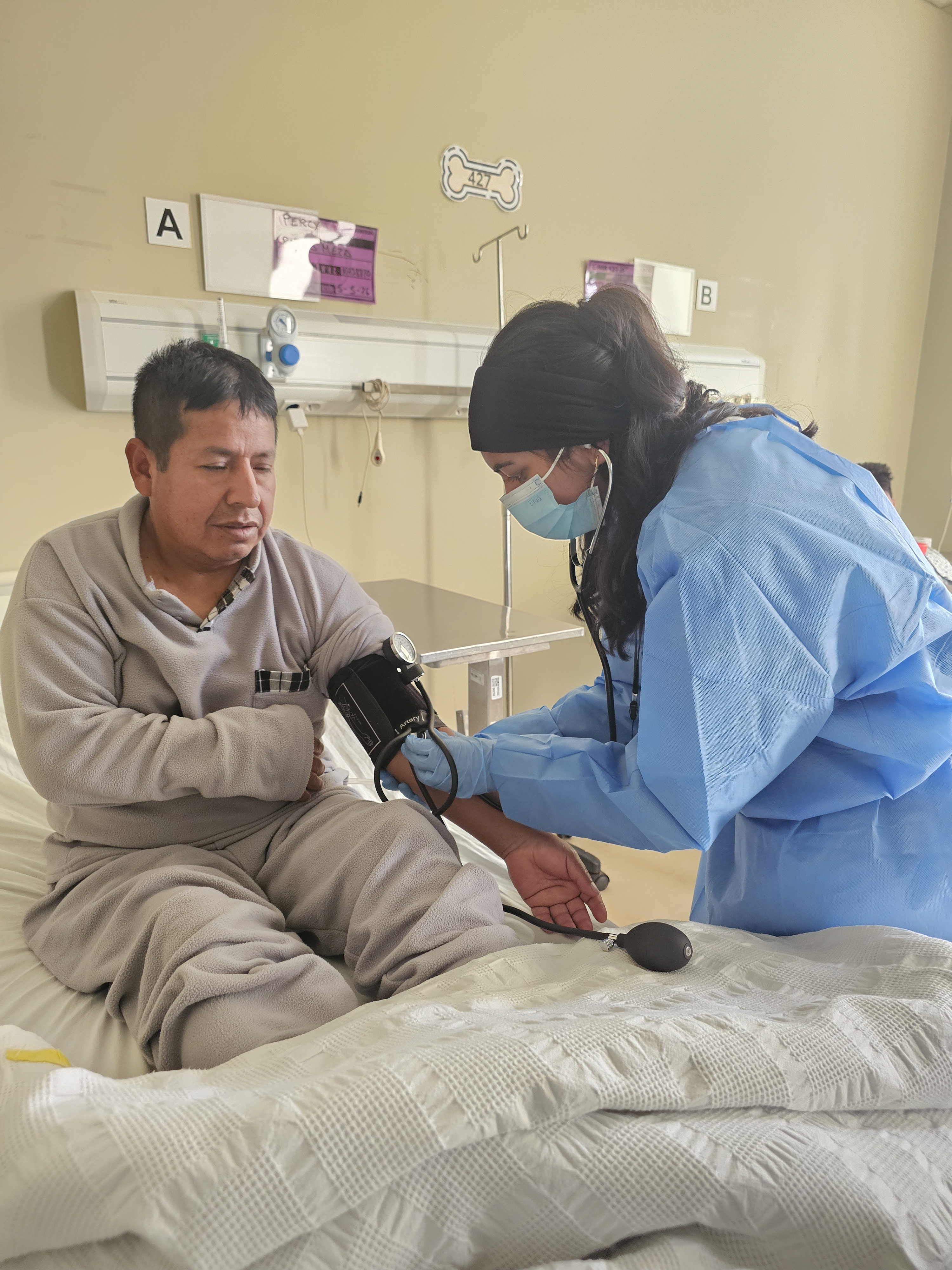
- Home visits alongside community nurses to monitor known hypertensive patients and reinforce behavior change
- Observation of how local clinicians manage chronic conditions with limited medication supplies and follow-up infrastructure
None of this is glamorous. It is methodical, relational, and essential.
Why a Volunteer Makes a Difference Here
Trust is the operating currency of community health.
A health campaign that arrives once and disappears builds nothing. But a volunteer who shows up consistently — who knows the community health worker by name, who remembers the grandmother from last week's home visit — becomes part of the fabric of care that makes prevention actually work.
For FIMRC volunteers, the lesson comes early: in low-resource settings, presence is an intervention.
When a community sees that someone from outside their world cared enough to come, to learn their context, to sit across from them and explain what a blood pressure reading means — that changes how they engage with health systems. It lowers the barrier. It builds the habit.
What Volunteers Take Back With Them
Working on hypertension prevention in these four communities teaches things that no clinical rotation can replicate.
It teaches how cardiovascular risk is shaped by food deserts, by grueling physical labor, by chronic poverty-induced stress. It teaches how health workers adapt WHO protocols to environments where the protocol assumes resources that simply do not exist. It teaches the difference between a health system that functions and one that survives.
For pre-med students, nursing students, and public health majors, that education is foundational. It builds the kind of clinical empathy and systems awareness that shapes careers.
This World Hypertension Day, Go Beyond Awareness
Awareness campaigns matter. But the communities FIMRC serves do not need more awareness at the global level.
They need people on the ground. Screening. Teaching. Building trust. Showing up.
If you are a healthcare student or professional ready to contribute to community-based chronic disease prevention — and to develop real global health competency in the process — FIMRC's Global Health Volunteer Program is where that work happens.
Learn more about volunteering with FIMRC here
FAQ SECTION
👉 What is World Hypertension Day and why does it matter for global health?
World Hypertension Day is observed every May 17 to raise awareness about hypertension — a condition affecting 1.4 billion people globally that is largely preventable and treatable, yet remains uncontrolled in three out of four people who have it. In low-resource settings, limited screening access makes community-based prevention especially critical.
👉 Can I volunteer in global health if I am a pre-med or nursing student with no clinical experience?
Yes. FIMRC's GHVP is designed for students at various stages of their training. Volunteers work alongside local healthcare professionals in supervised community settings, gaining exposure to public health practice, health education, and chronic disease prevention without requiring prior clinical credentials.
👉 What does a global health volunteer actually do in communities affected by hypertension?
Volunteers support blood pressure screening campaigns, health education workshops, home visits, and referral coordination alongside local health teams. The work is community-based, meaning it happens in homes, schools, and community centers — not just clinics.
👉 How does volunteering with FIMRC help with medical school or nursing school applications?
FIMRC's GHVP provides documented, structured field experience in global health settings — which demonstrates clinical interest, cultural competency, and commitment to underserved populations. These are qualities that medical and nursing school admissions committees actively look for.
👉 Which FIMRC project sites have the highest hypertension burden?
All four sites — Peru, Uganda, Costa Rica, and Ecuador — serve communities with significant chronic disease challenges. Uganda carries a particularly high burden due to limited rural health infrastructure, while highland communities in Peru face additional cardiovascular risk factors related to altitude and limited access to preventive care.
Want your questions on volunteering abroad answered quicker? Book a quick call with our team!
Stay connected with news and updates!
Join our mailing list to receive the latest news and updates from our team.
Don't worry, your information will not be shared.
We hate SPAM. We will never sell your information, for any reason.
