
World Alzheimer’s Day 2026: The Dementia Burden FIMRC Volunteers Witness in Peru, Uganda, and Ecuador
Sep 18, 2026An elderly woman in a rural community outside Huancayo begins forgetting things. Her family notices. They assume it is age. There is no memory clinic within reach. No specialist who speaks her language. No screening tool available at the health post she rarely visits. The conversation about what might be happening never takes place.
This is not an exceptional scenario.
In Peru, the number of people living with dementia is projected to rise from 196,699 in 2019 to 744,847 by 2050 — a growth of 279% (Alzheimer’s Disease International). Studies from northern Peru show that 16% of older adults already show signs of dementia, with cognitive impairment linked directly to modifiable risk factors including malnutrition and unmanaged chronic conditions like diabetes and hypertension, conditions that FIMRC volunteers encounter in community health work every day.
The disease is growing. The infrastructure to catch it early is not keeping pace.
World Alzheimer's Day 2026, observed September 21, carries a theme that confronts this gap directly: The Earlier You Know, The More You Can Do: A Dementia Diagnosis Matters.
Dementia’s Global Growth, Unevenly Distributed
Globally, approximately 55 million people are living with dementia today. Alzheimer's disease accounts for 60 to 70% of those cases. By 2050, that global figure is projected to reach 152.8 million, with a significant and growing proportion in low and middle-income countries where screening is limited, stigma is high, and healthcare systems were not designed with cognitive aging in mind.
In the communities FIMRC serves, that burden has specific shapes.
In Ecuador, mortality from Alzheimer's and other dementias more than doubled between 2012 and 2022, rising from 2.2 to 4.86 deaths per 100,000 inhabitants. The increase disproportionately affects women over 65 and residents of the Sierra region, where chronic altitude exposure, postmenopausal hormonal changes, and unequal access to health services compound cognitive risk in ways that formal health systems are only beginning to document.
In Uganda, a study in the eastern region, the area where FIMRC's Bududa site is located, found that nearly one in four older adults showed signs of probable or possible dementia. Central nervous system infections, which remain prevalent in rural East Africa, were identified as a significant risk factor, connecting infectious disease burden directly to long-term cognitive outcomes.
In Peru and across the Latin American and Caribbean region, Alzheimer's prevalence among rural, lower-educated, and older women is consistently higher than in urban populations, a pattern that reflects the same inequities in access, education, and chronic disease management that shape health outcomes across every dimension of community health.
These are not distant projections. They are the older patients FIMRC volunteers meet during health campaigns, home visits, and community screenings.
What Early Alzheimer’s Diagnosis Actually Requires
The 2026 campaign theme centers on early diagnosis, and makes a case that is worth understanding in full.
An early Alzheimer's diagnosis does not currently mean a cure. It means access to support, planning, and interventions that slow progression and improve quality of life. It means caregivers who understand what they are managing. It means families who know what to expect and how to adapt. It means connecting individuals to resources that only work if they are engaged before the disease advances.
In high-income settings, early diagnosis is a clinical challenge. In low-resource communities, it is a systemic one.
There are no memory specialists in rural Bududa. No standardized cognitive screening in community health posts in highland Peru. No public awareness campaigns in Anconcito that teach families what early memory loss actually looks like and why it is worth pursuing an evaluation. The gap between knowing that early diagnosis matters and making it accessible to the communities where it is most needed is wide — and it is closed, slowly, through community-based health work.
Where FIMRC Volunteers Intersect With Dementia Prevention
FIMRC's Global Health Volunteer Program (GHVP) places volunteers across Peru, Uganda, Costa Rica, and Ecuador, working alongside local healthcare teams on community health initiatives that are more connected to Alzheimer's prevention than they might initially appear.
The modifiable risk factors most strongly linked to dementia onset — hypertension, diabetes, physical inactivity, social isolation, low education, and depression — are the same conditions that FIMRC's community health programs address through chronic disease clubs, health education workshops, nutritional programs, and caregiver support initiatives.
Volunteers working in these settings contribute to:
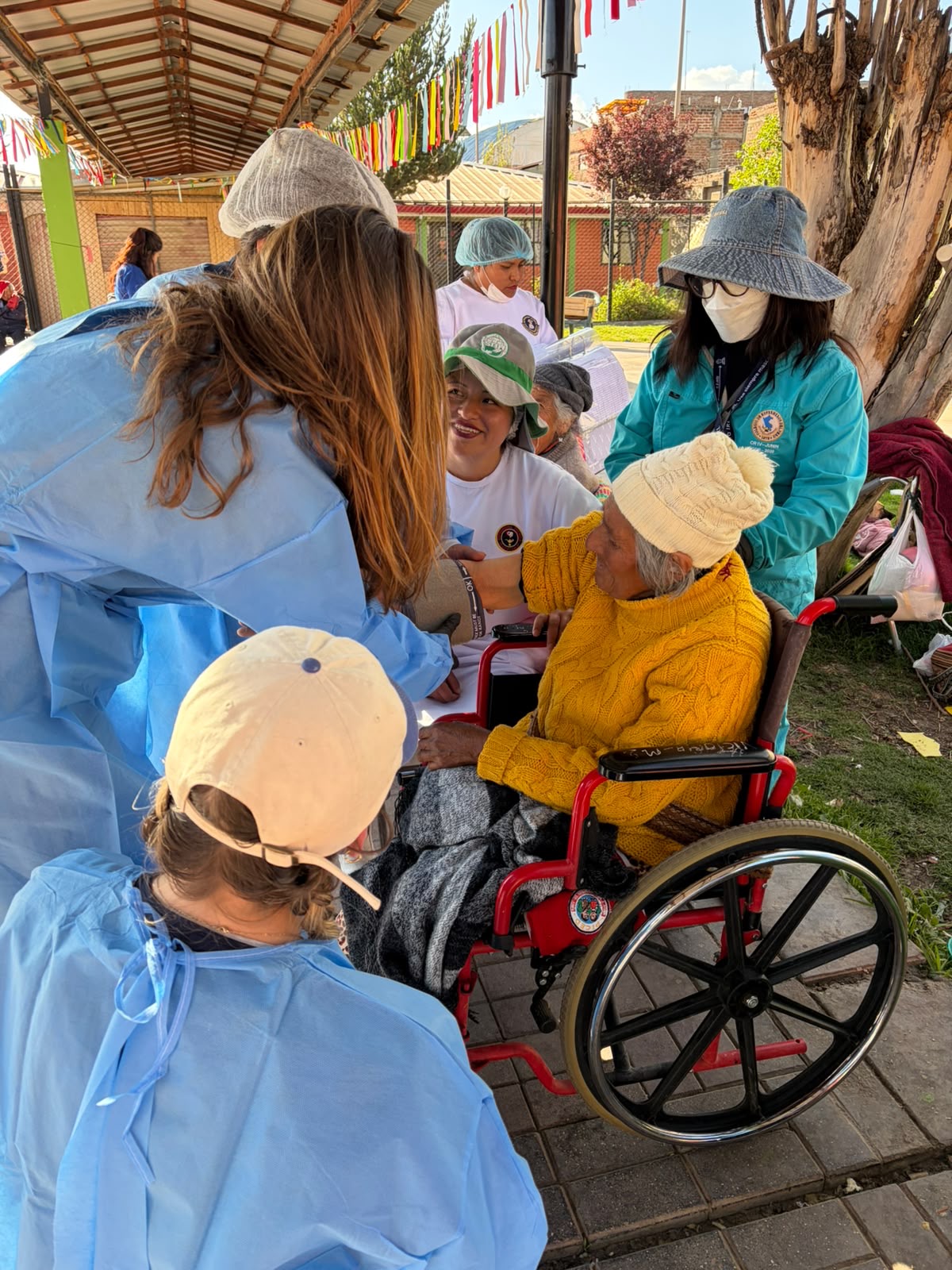
- Chronic disease screening campaigns that identify and manage hypertension and diabetes in older adults, conditions directly linked to cognitive decline risk
- Health education activities that reach elderly community members who rarely initiate clinic visits
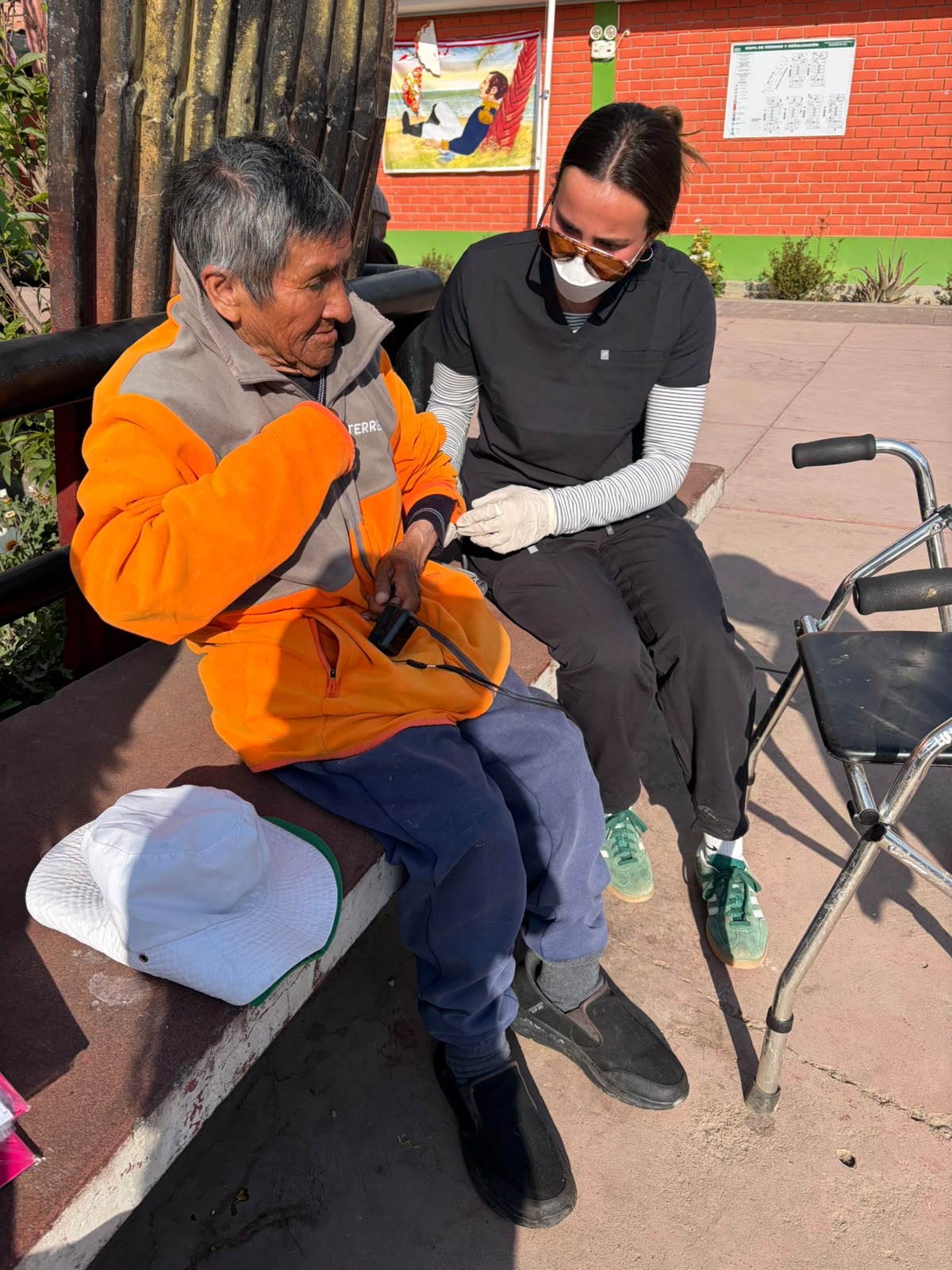
- Home visits alongside local health workers that identify isolated older adults whose health needs, including cognitive changes, may otherwise go entirely unnoticed
- Support for caregivers managing elderly family members, providing information, education, and connection to local resources
- Community health campaigns that build the kind of health literacy that makes families more likely to recognize cognitive changes early and seek evaluation
Volunteers do not diagnose Alzheimer's. But they work within the community infrastructure that determines whether a diagnosis is ever possible.
The Caregiver No One Is Asking About
Behind every person living with Alzheimer's, there is almost always a family member who has reorganized their life to provide care, without training, without respite, and often without anyone asking how they are doing.
In the communities FIMRC serves, that caregiver is frequently a woman. A daughter, a wife, a daughter-in-law, providing full-time support for someone whose needs are increasing while the resources available to help remain the same. The emotional, physical, and economic toll of unpaid dementia caregiving in low-resource settings is substantial and largely invisible to formal health systems.
FIMRC's community health approach recognizes this. Programs in Ecuador that include caregiver support for people with disabilities, and the broader emphasis on family involvement across FIMRC's health education work, reflect an understanding that community health cannot attend only to patients and ignore the people sustaining their care.
September 21 and the Work That Follows It
World Alzheimer's Day 2026 will generate awareness. Reports will be released. Campaigns will run. Purple ribbons will be worn.
In Huancayo, in Bududa, in Anconcito, and in the rural communities of Costa Rica, the people most affected by this disease will not see most of that. What they will see is whether a health volunteer shows up. Whether a community health worker asks the right questions. Whether a caregiver gets the information they need to understand what is happening to the person they love.
That work does not begin or end on September 21.
If you are a student or healthcare professional ready to contribute to community health work that reaches the people most at risk — long before any awareness day arrives — this is where that work begins.
Frequently Asked Questions
What is World Alzheimer's Day 2026 and what is its theme?
World Alzheimer's Day is observed every September 21, organized by Alzheimer's Disease International. The 2026 theme, The Earlier You Know, The More You Can Do: A Dementia Diagnosis Matters, focuses on the critical importance of early diagnosis — emphasizing that while there is currently no cure for Alzheimer's, early identification gives individuals and families access to support, planning, and interventions that significantly improve quality of life and slow disease progression.
How significant is the dementia burden in Peru, Uganda, and Ecuador?
The burden is significant and growing. In Peru, dementia prevalence is projected to rise 279% by 2050, with studies showing 16% of older adults in northern regions already showing signs of dementia. In Uganda, nearly one in four older adults in eastern districts show signs of probable or possible dementia. In Ecuador, Alzheimer's mortality more than doubled between 2012 and 2022, disproportionately affecting older women and rural highland populations — precisely the communities FIMRC serves.
How does FIMRC's community health work relate to Alzheimer's prevention?
The modifiable risk factors most strongly linked to dementia — hypertension, diabetes, physical inactivity, social isolation, and depression — are the same conditions FIMRC's programs address through chronic disease campaigns, health education, nutritional support, and caregiver programs. Volunteers who support these initiatives contribute to the community health infrastructure that reduces dementia risk factors and improves the likelihood of early identification.
Why is early Alzheimer's diagnosis particularly difficult in low-resource communities?
In rural communities across Peru, Uganda, Costa Rica, and Ecuador, cognitive screening tools are rarely available at community health posts. Memory specialists are concentrated in urban centers far from rural populations. Cultural stigma around cognitive decline discourages families from seeking evaluation. And health literacy gaps mean that early symptoms are frequently attributed to normal aging rather than recognized as signs warranting medical attention.
What role do caregivers play in dementia care in the communities FIMRC serves?
In low-resource settings, dementia care falls almost entirely on family members — most often women — who provide intensive unpaid support without training, respite, or formal recognition. FIMRC's community health approach includes caregiver support and education as part of its programming, recognizing that sustainable community health requires attending to the needs of caregivers, not only patients.
How can I volunteer in community health work that addresses dementia and aging? Global health volunteer programs that focus on chronic disease management, elderly outreach, and caregiver support — rather than acute clinical care alone — offer the most direct exposure to dementia-related community health work. FIMRC's Global Health Volunteer Program integrates this work into its chronic disease and elderly health initiatives across Peru, Uganda, Costa Rica, and Ecuador. Visit FIMRC's program page to see current opportunities by location.
Want your questions on volunteering abroad answered quicker? Book a quick call with our team!
Stay connected with news and updates!
Join our mailing list to receive the latest news and updates from our team.
Don't worry, your information will not be shared.
We hate SPAM. We will never sell your information, for any reason.
