
What It's Like to Volunteer in Peru: Lilly Markowitz's FIMRC Story
Sep 04, 2026When people ask Lilly Markowitz what her favorite part of five weeks in Peru was, she does not hesitate.
"The people."
Not the hospital rotations. Not the community health campaigns. Not the surgery she observed or the workshops she led. The people — the doctors, the nurses, the children at El Rosario Orphanage who told her, with complete seriousness, that she had big feet.
That answer says more about what global health volunteering actually is than any program description could.
Who Lilly Is, and Why She Came
Lilly Markowitz is a sophomore Biology student from Alabama. She is also a licensed EMT, credentialed in both Alabama and Kentucky, which means she arrived in Huancayo not as a curious observer, but as someone who had already seen what healthcare looks like under pressure.
She came to Peru anyway. Because knowing how to respond in an emergency is not the same as understanding how communities build health over time. And that distinction, between acute care and community-based health, is exactly what FIMRC's Global Health Volunteer Program is designed to teach.
Five weeks later, she had experienced both sides of it.
Hospital Rotations and Community Health Work in Huancayo
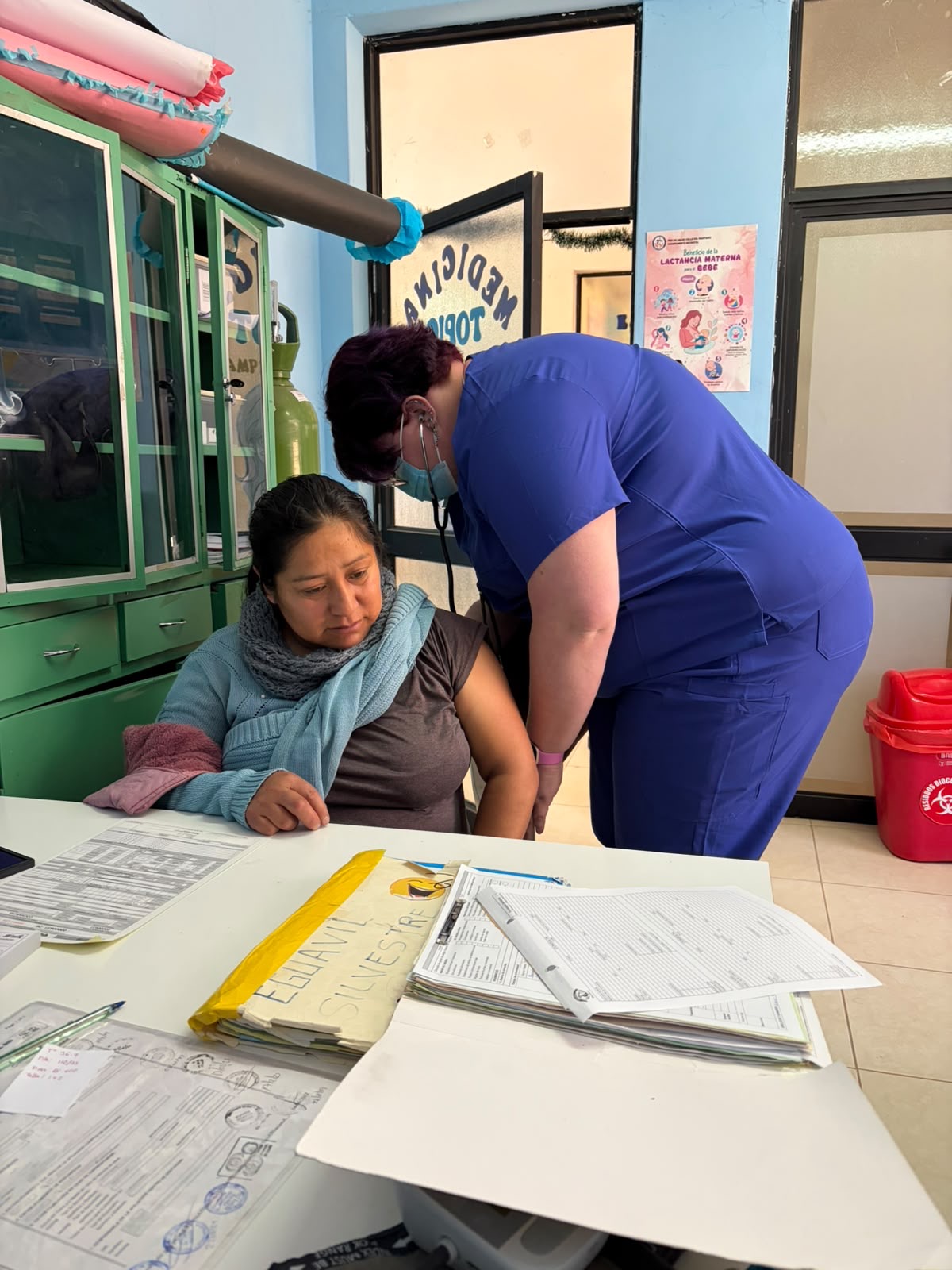
At the hospital in Huancayo, Lilly joined afternoon rotations alongside Peruvian healthcare professionals, observing real patient interactions in a clinical environment that operates with different resources, different protocols, and different expectations than anything she had encountered in her EMT work.
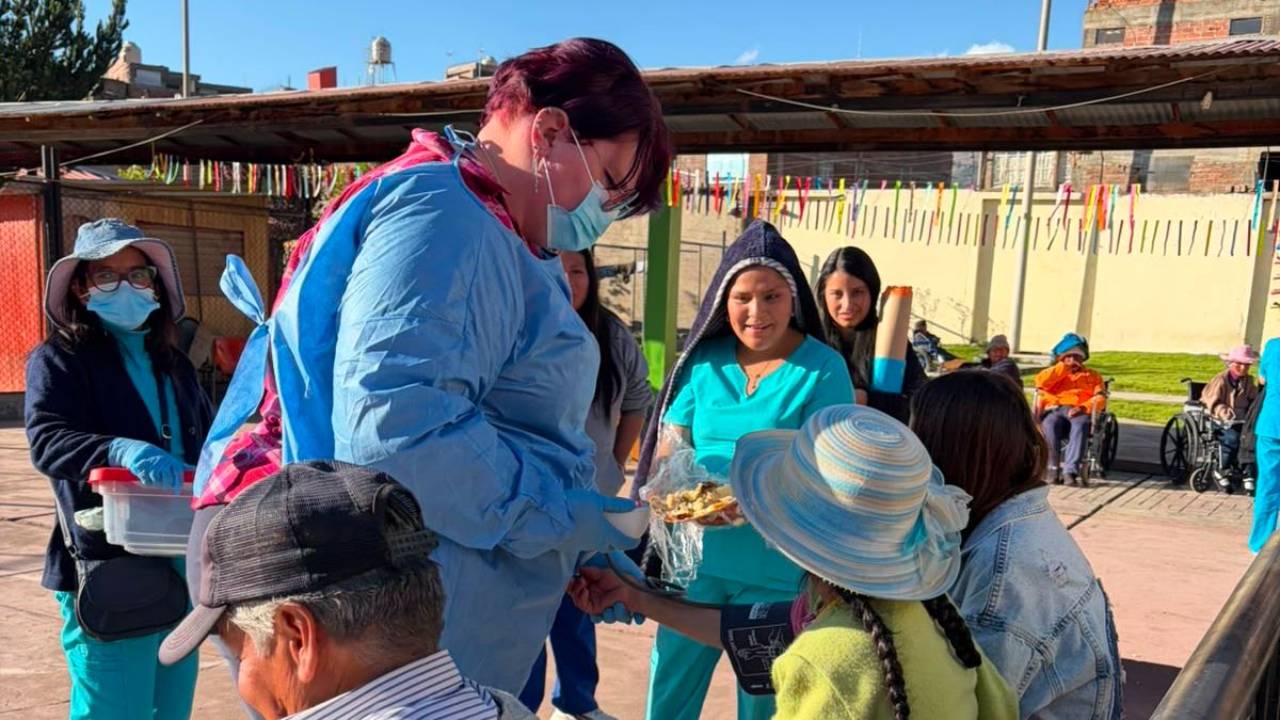
She also joined a community health campaign, supporting activities designed to bring healthcare directly to people who might not otherwise seek it out. She worked with older adults. She engaged with patients in their own spaces, on their own terms, learning about health needs that are shaped as much by geography and circumstance as by biology.
And then she led workshops.
At a local shelter, Lilly ran a session for mothers on how to identify and prevent pneumonia — sharing information that can mean the difference between early intervention and a preventable emergency. She also worked with the children at the shelter, creating what the team described as an engaging space to learn about health and prevention.
For an EMT used to responding after something has already gone wrong, teaching families to recognize warning signs before a crisis arrives was a different kind of medicine entirely.
El Rosario and the Children Who Remembered Her Shoes
Some of the most lasting moments of Lilly's five weeks did not happen in a clinic.
At El Rosario Orphanage, she formed bonds with children she describes as "sweet and funny" — children who, in the way that children do, cut straight past any professional distance and commented on her feet.
"I hope to see them again someday," she says.
That sentence is not a throwaway sentiment. It reflects something that every FIMRC volunteer who has worked at El Rosario eventually feels: that the relationships built there are not part of the volunteer experience. They are the point of it.
The Art That Stopped Her Cold
Lilly arrived in Peru knowing, at least in theory, that Peruvian artisans were talented. She expected colorful textiles and detailed craftsmanship.
What she did not expect was the gourds.
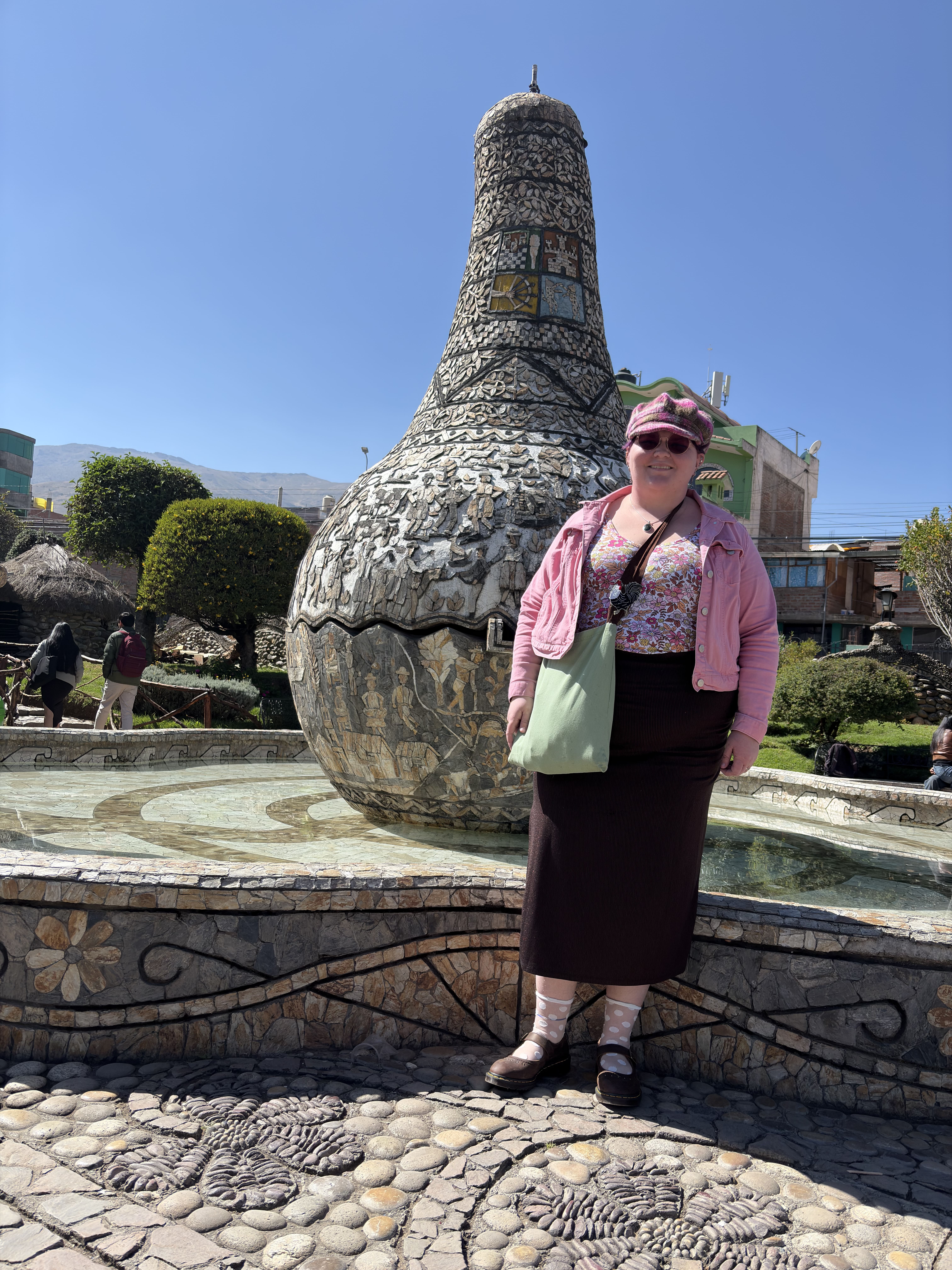
"I marveled at the intricate scenes of daily life carved on gourds the size of my fist," she recalls. "I was mesmerized by the explosion of colors on hats and purses. Gourds and textiles are two of my passions, so that was part of the culture I could really connect with."
It is a detail that matters. Not because it is clinically relevant — it is not — but because it is the kind of moment that makes a place real. A volunteer who connects with a culture through art, through food, through the specific humor of children in an orphanage, is a volunteer who will carry that place with them. Into their career. Into the way they see patients who come from somewhere different than where they trained.
Why a 5-Week Volunteer Program Builds Deeper Community Trust
Lilly spent five weeks in Huancayo. Not five days. Not two weeks.
That duration is not incidental. Community health work is built on trust, and trust takes time. The mothers who attended her pneumonia workshop did not open up to her because she had credentials. They opened up because she had shown up consistently — at the hospital, at the campaign, at the shelter — and the community had begun to recognize her as someone who was genuinely present, not passing through.
"Peru is a strikingly beautiful country filled with some of the friendliest people I've ever met," she says. "I was privileged to live and work alongside many wonderful people and to explore their country for five weeks."
Privileged. That word choice is deliberate and worth noticing. Lilly did not describe her experience as impactful, or transformative, or educational — though it was all of those things. She described it as a privilege. The kind of clarity that tends to arrive when someone has been paying close enough attention to notice what they received, not just what they gave.
The Question She Will Keep Answering
People will keep asking Lilly about her favorite part of Peru.
She will keep saying: the people.
The doctors and nurses who taught her. The children who laughed at her feet. The mothers who sat in a workshop and learned something that might one day protect their child from a preventable illness. The artisans whose gourds she will probably think about for the rest of her career.
If you are a pre-med student, a nursing student, or a healthcare professional at the beginning of your path — and you want to understand what care looks like when it is built from relationship rather than infrastructure — Huancayo is where that education begins.
FAQ SECTION
What did Lilly Markowitz do during her five weeks volunteering with FIMRC in Peru?
Lilly participated in hospital rotations alongside Peruvian healthcare professionals, joined a community health campaign working with older adults, led a pneumonia prevention workshop for mothers, and ran a health education session for children at a local shelter. She also spent time at El Rosario Orphanage, building relationships with the children there alongside her clinical and community work.
Do I need to be a medical student to volunteer with FIMRC in Peru?
No. FIMRC's Global Health Volunteer Program welcomes students and professionals from a range of healthcare backgrounds — including Biology students, EMTs, nursing students, pre-med students, and public health majors. Lilly arrived as a licensed EMT and Biology sophomore, not a medical student, and contributed meaningfully across clinical and community settings throughout her five weeks.
What is El Rosario Orphanage and how does FIMRC work there?
El Rosario is a shelter in Huancayo where FIMRC volunteers engage with children through health education workshops and community programming. Volunteers lead sessions on common illnesses and health prevention, creating interactive learning experiences that combine health education with genuine human connection.
How long can I volunteer with FIMRC in Huancayo, Peru?
FIMRC's GHVP offers flexible program lengths, with volunteers like Lilly choosing to stay for five weeks. Longer stays allow volunteers to build deeper community relationships, contribute more meaningfully to ongoing health initiatives, and gain a more complete picture of how community-based healthcare functions over time.
What makes Huancayo a unique global health volunteer destination?
Huancayo sits in the Peruvian highlands at over 3,200 meters above sea level, serving communities where geographic isolation, altitude-related health challenges, and limited infrastructure create a distinctive public health environment. Volunteers gain exposure to a healthcare system that operates under real constraints — while being immersed in a culture known for its extraordinary artisanal traditions, community warmth, and Andean identity.
Want your questions on volunteering abroad answered quicker? Book a quick call with our team!
Stay connected with news and updates!
Join our mailing list to receive the latest news and updates from our team.
Don't worry, your information will not be shared.
We hate SPAM. We will never sell your information, for any reason.
