
What Global Health Volunteers Learn From the World’s Nurses
May 15, 2026712 women die every day from preventable pregnancy-related causes. Most of them never saw a doctor. Many of them saw a nurse — or saw no one at all.
In most health systems, nurses are the first point of contact — the ones who assess, triage, educate, comfort, and follow up. In low-resource communities, they often do all of that without the equipment, the staffing ratios, or the institutional support their counterparts in high-income settings take for granted. And they show up anyway.
Every May 12, International Nurses Day marks the birthday of Florence Nightingale and asks the world to recognize what nursing actually demands. This year's theme — Our Nurses. Our Future. Empowered Nurses Save Lives — goes a step further. It argues that safe workplaces, fair opportunities, and genuine leadership roles for nurses aren't just good policy. They're the foundation of functional health systems.
In the communities where FIMRC global health volunteers work, that foundation is being built one nurse at a time.
The Workforce Gap That Statistics Can't Fully Capture
Nursing professionals represent 63% of the health workforce across the Americas — the single largest professional group in regional health systems. Yet nearly 40% of countries in the region have fewer than 30 nursing professionals per 10,000 people.
That gap doesn't show up in a spreadsheet the way it shows up in real life.
It looks like one nurse anchoring an entire rural health post, responsible for a geographic area that would require a full clinical team in a different setting. It looks like a community nurse conducting home visits on foot because the families she serves have no way to reach the clinic. It looks like a healthcare worker managing complex care decisions with limited equipment, limited backup, and very little institutional acknowledgment of what that actually requires.
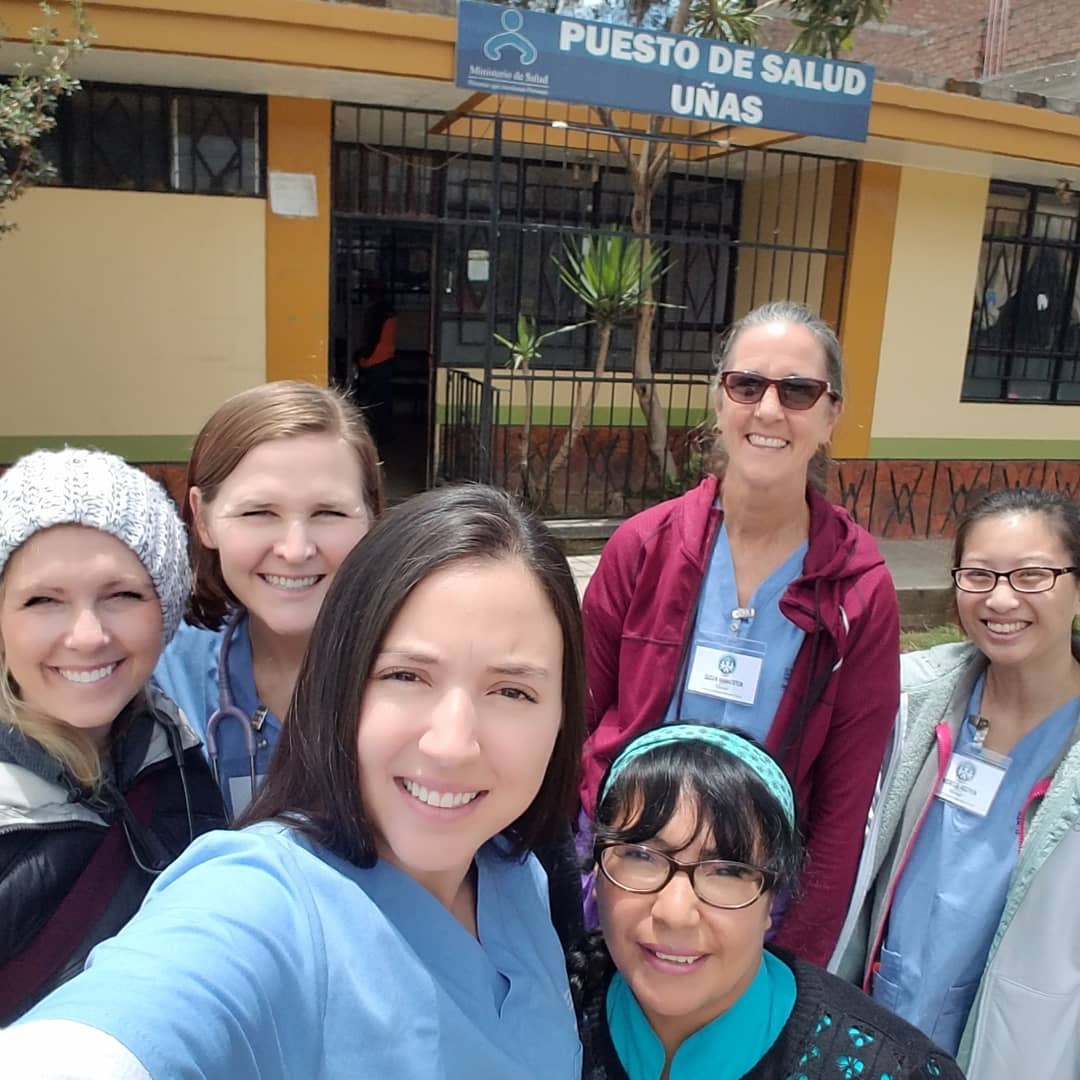
In Peru, Uganda, Costa Rica, and Ecuador — the four communities where FIMRC operates — this is not an edge case. It is the daily reality that local nursing teams navigate, and that FIMRC medical volunteers are placed directly inside.
What Volunteers Do Alongside Nursing Teams
FIMRC's Global Health Volunteer Program doesn't put volunteers in observation chairs. It places them inside community health teams, working hand in hand with local nurses and health promoters on work that matters.
In practice, that includes:
- Supporting community health campaigns led by nursing staff in schools, homes, and public spaces
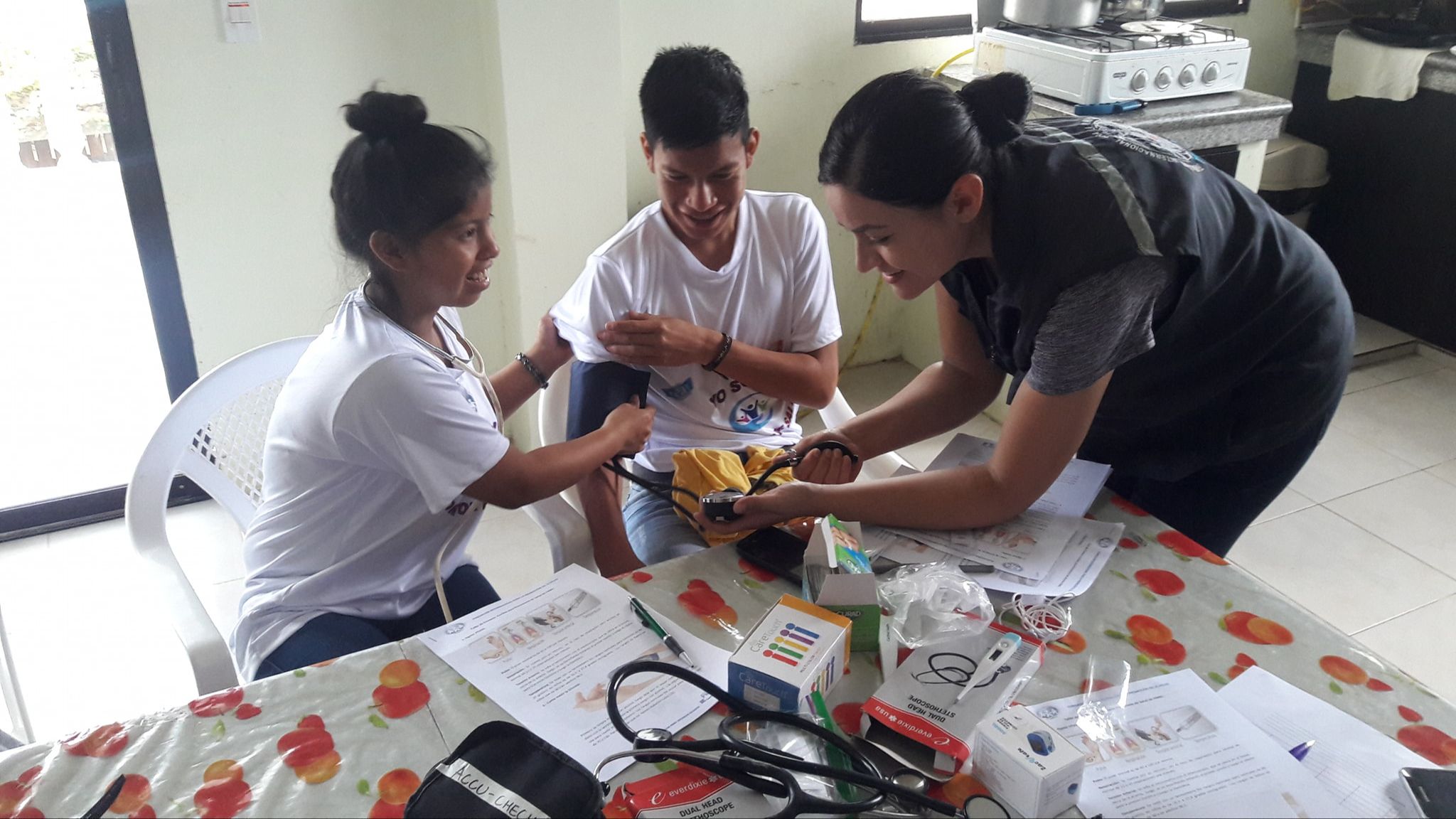
- Assisting with patient intake, health screenings, and preventive care activities at local health posts
- Joining community nurses on home visits to reach families who cannot access clinics
- Delivering health education on hygiene, nutrition, maternal care, and chronic disease prevention
- Observing how nursing teams manage complex care decisions with limited infrastructure
- Contributing to outreach programs across all four FIMRC project sites
The operative word is alongside. Volunteers aren't there to replace or lead. They're there to contribute, learn, and support — under the guidance of nurses who understand their communities in ways that take years to develop.
The Education That Only Nurses Can Give
No clinical rotation prepares you for watching a single nurse run an entire rural health post. No public health course fully captures what it looks like when community trust is the most important clinical instrument available.
Nurses in FIMRC's project communities are often the most trusted figures families know. They understand which households need a check-in before the next scheduled visit. They know which health messages land and which ones don't translate across cultural context. They navigate the space between clinical protocol and community reality with a fluency that only comes from sustained presence.
For nursing students, pre-med students, and future public health professionals, working inside that dynamic is genuinely formative. In Huancayo, volunteers observe how care protocols adapt to highland geography and altitude-related health challenges. In Bududa, they see how a single dedicated nurse can be the difference between a community that has health access and one that doesn't. In Costa Rica and Ecuador, they watch nursing roles expand to fill the gaps left by physician shortages — and they start to understand what expanding the scope of nursing actually means at the ground level.
These aren't case studies. They're the kind of experiences that reshape how you think about healthcare delivery for the rest of your career.
Celebrating Nurses Means Supporting the Systems Around Them
Recognition matters. But nurses don't need applause as much as they need safe working conditions, adequate staffing, leadership pathways, and communities of support that make the work sustainable.
International Nurses Day is a useful moment to say thank you. It's a more useful moment to ask what nurses actually need — and to consider what role each of us can play in building health systems that give them what they deserve.
FIMRC's Global Health Volunteer Program offers nursing students and future healthcare professionals the chance to stand alongside nursing teams in communities where the need is real, the mentorship is genuine, and the experience stays with you.
If you're ready to learn from the people who know community health best — this is where that starts.
Explore FIMRC's Global Health Volunteer Program!
FAQ Section
👉Why is International Nurses Day celebrated on May 12?
May 12 marks the birthday of Florence Nightingale, widely recognized as the founder of modern nursing. International Nurses Day has been observed on this date since 1965, and is coordinated annually by the International Council of Nurses with a theme focused on current challenges in the profession.
👉What is the 2026 International Nurses Day theme?
The 2026 theme is Our Nurses. Our Future. Empowered Nurses Save Lives. It emphasizes the need for safe working environments, equitable career opportunities, and expanded leadership roles for nurses — framing nurse empowerment as a direct driver of better health outcomes globally.
👉How do global health volunteers support nursing teams in underserved communities?
Global health volunteers work directly alongside local nurses and health promoters through community outreach, home visits, health education, and patient screenings. In FIMRC's program, volunteers are embedded in community health teams across Peru, Uganda, Costa Rica, and Ecuador, contributing to work led and guided by local nursing staff.
👉What can nursing or pre-med students gain from a global health volunteer program?
Students gain hands-on exposure to community-level nursing practice in low-resource settings — including how nurses adapt care protocols, manage complex decisions with limited infrastructure, and build the community trust that makes public health work effective. It's a perspective that clinical training in high-income settings rarely provides.
👉Why is the nursing workforce shortage a global health issue?
Nursing professionals make up the majority of healthcare workers in most countries, yet significant shortages persist — particularly in low- and middle-income regions. When nursing capacity is stretched, preventive care, maternal health, chronic disease management, and community outreach all suffer. Strengthening nursing systems is one of the highest-leverage investments in global health equity.
Want your questions on volunteering abroad answered quicker? Book a quick call with our team!
Stay connected with news and updates!
Join our mailing list to receive the latest news and updates from our team.
Don't worry, your information will not be shared.
We hate SPAM. We will never sell your information, for any reason.
