
Volunteering in Peru with FIMRC: A Nursing Student's Global Health Experience in Huancayo
Aug 10, 2026Nina Paoliello is a nursing student from New York. She is also a single mother of two, returning to school later in life, and someone who has spent years working in patient care before deciding to pursue her BSN. She is, by any measure, someone who already understands what it means to show up for other people.
She went to Huancayo, Peru with FIMRC expecting to give.
What she did not expect was how much she would receive.
What Volunteering with FIMRC in Peru Actually Taught You
Before arriving in Peru, Nina had a clear sense of why she wanted to go.
"I volunteered in Peru because I wanted to better understand healthcare from a global perspective and learn how communities provide care with different resources, challenges, and systems," she explains. "I especially wanted to understand how culture shapes people's perspectives on health, healing, and medicine — believing that becoming a better healthcare provider requires not only clinical knowledge, but also cultural humility."
That clarity of intention is something many healthcare students carry into international volunteer experiences. What changes, consistently, is what they find when they get there.
For Nina, the first lesson came before she ever stepped inside a clinic.
A Host Family That Did Not Wait to Welcome Her
On her very first evening in Huancayo, Nina's host family dressed her in traditional clothing and taught her to dance the Santiago. They shared meals, laughter, and tears. They went out of their way to show her their world, not as a guest to be accommodated, but as someone who, in their eyes, already belonged.
"From my very first evening in Huancayo, my host family embraced me as though I had always belonged," she recalls.
That generosity, she would discover, was not particular to her host family. It was the texture of every interaction she had in Peru, in the clinics, in the streets, in the medical university, in the homes she visited. It arrived before she had done anything to earn it, and it did not diminish.
Inside the Rural Clinics: What They Taught Her
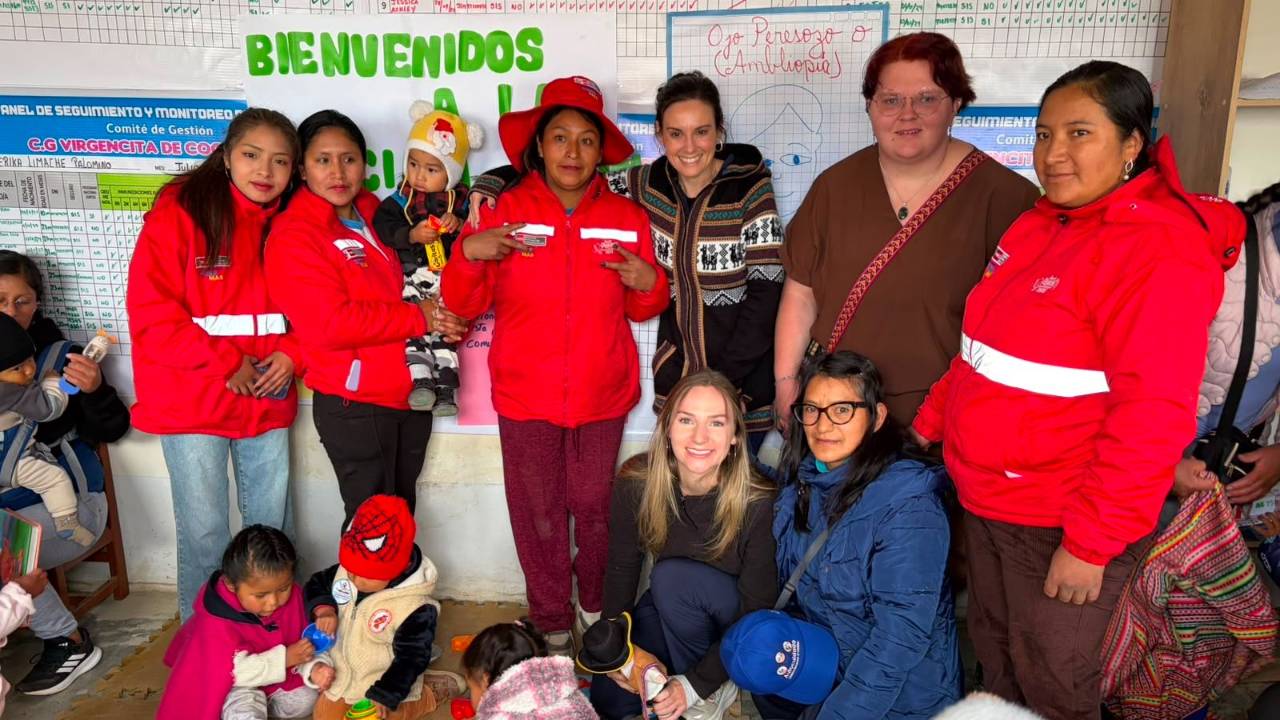
Inside the rural clinics where Nina worked alongside Peruvian healthcare providers, the differences from what she knew were immediate and visible. Resources were limited. Procedures differed from what she had been trained to expect in the United States.
But one thing did not differ.
"Every patient was treated as a person before anything else," she says. "We spent time talking, listening, and connecting in ways that reminded me that healthcare is about far more than diagnoses and treatments."
It is a lesson that appears in every nursing school curriculum. It lands differently when you witness it in a clinic where there is no equipment to hide behind — where the only consistent tool available is the attention of the person in front of you.
Roberto's Peaches
One moment, above all others, has stayed with Nina.
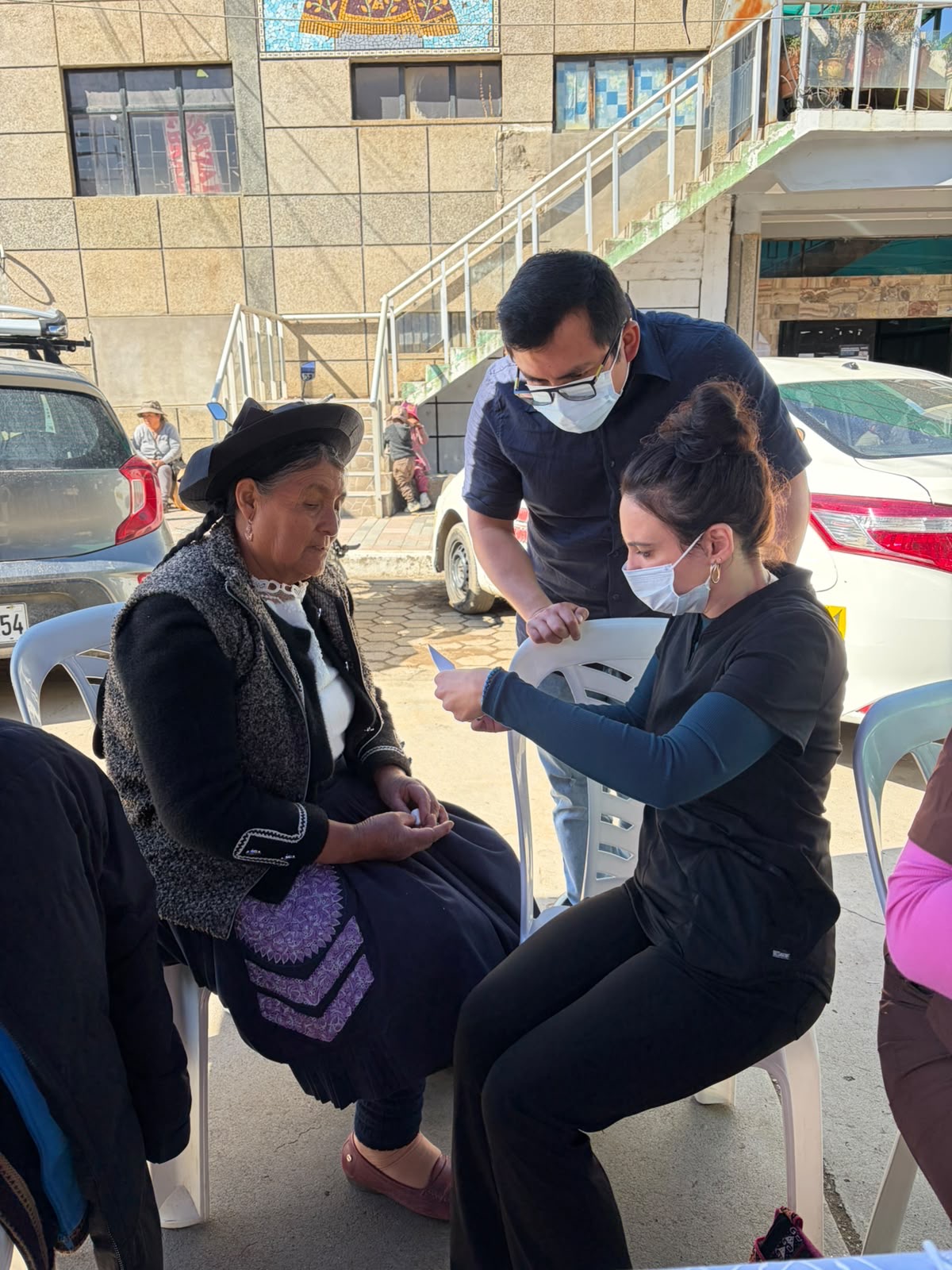
After being seen at one of the rural clinics, an elderly patient named Roberto reached into his backpack and handed the team several peaches from his own tree. A thank you. A gesture from a man who, by any material measure, had very little.
"What I found so moving about his gesture is that he had so little, yet his instinct was to give," Nina reflects. "In that one simple gesture, I was reminded that generosity isn't measured by how much we have, but by our willingness to share what we do."
In a career that will involve thousands of patient encounters, Nina already knows this is one she will carry.
Surgery, Songs, and a Medical University That Welcomed Her In
At the local medical university in Huancayo, the experience deepened further.
Students and educators walked Nina through Peru's healthcare system, shared their cadaver lab with pride, and performed traditional songs and dances — treating cultural exchange as inseparable from professional education. In the operating room, the nursing staff took her under their wing, ensuring she saw every aspect of the procedure. Before she left, they exchanged contact information so the learning could continue across borders.
"The nurses took me under their wing, ensuring I got to see every aspect of the procedure process," she recalls, "and later exchanging contact information so we could continue learning from one another."
That detail matters. Connection that outlasts the experience is not a byproduct of good volunteering. It is one of its most lasting outcomes.
The Lesson That Had Nothing to Do With Medicine
By the time Nina returned to New York, she had observed a surgery in a Peruvian operating room, worked in rural clinics, attended sessions at a medical university, and spent time in a community that operates on fundamentally different resources than the one she trained in.
None of those experiences gave her the most important lesson.
"Some of the most meaningful lessons I learned had nothing to do with medicine itself," she says. "They were lessons about hospitality, humility, and the universal language of human connection. Those are the lessons that will stay with me more than any procedure I observed, and they will continue to shape the kind of nurse — and the kind of person — I hope to become."
This is what FIMRC volunteers describe, again and again, when they return from Huancayo. Not what they taught. What they were taught.
Apply to FIMRC's Global Health Volunteer Program
Nina went to Peru hoping to make a small difference.
She will be the first to tell you that the people of Huancayo made a far larger one in her.
If you are a nursing student, a pre-med student, or a healthcare professional ready to experience care in a context where the most important tool is human connection, this is where that experience begins.
FAQ SECTION
What is it like to volunteer in Huancayo, Peru with FIMRC as a nursing student?
Nursing students who volunteer with FIMRC in Huancayo work alongside Peruvian healthcare providers in rural clinics, participate in community health outreach, and gain exposure to a health system that operates with significantly different resources than those in the United States. The experience builds clinical adaptability, cultural humility, and a deeper understanding of the social determinants that shape healthcare delivery in low-resource settings.
Do I need prior clinical experience to volunteer with FIMRC in Peru?
No prior clinical experience is required for FIMRC's Global Health Volunteer Program. Volunteers at all stages — from first-year students to experienced healthcare professionals — are welcomed. The program is designed to provide structured, supervised learning within real community health settings.
What does a typical day look like for a FIMRC volunteer in Huancayo?
Days in Huancayo typically include work at rural health clinics alongside local providers, community health outreach activities, and educational sessions. Volunteers are also immersed in community life through homestays, which provide cultural context that deepens the professional learning experience.
How does volunteering abroad strengthen a nursing or medical school application?
International volunteer experience with a structured program like FIMRC's GHVP demonstrates clinical interest, cultural competency, and a commitment to underserved populations — qualities that admissions committees at nursing and medical schools actively look for. The experience also provides specific, substantive examples that strengthen personal statements and interviews.
What makes FIMRC's volunteer program in Peru different from other international programs?
FIMRC's GHVP is community-embedded rather than tourist-adjacent. Volunteers live with host families, work directly alongside Peruvian healthcare providers, and participate in real patient care and community health initiatives. The depth of immersion — cultural, clinical, and social — distinguishes the experience from shorter-term or more observational programs.
Want your questions on volunteering abroad answered quicker? Book a quick call with our team!
Stay connected with news and updates!
Join our mailing list to receive the latest news and updates from our team.
Don't worry, your information will not be shared.
We hate SPAM. We will never sell your information, for any reason.
