
Victoria's Four Weeks: Surgery, Homestays, and the Peruvian Healthcare System
Sep 25, 2026As told to FIMRC by Victoria Cowan
Most international health experiences hand students a clipboard and a corner of the room. You watch. You take notes. You learn from a careful distance.
Victoria Cowan, 19 years old and from the Bay Area in California, came to Huancayo, Peru expecting something different — and FIMRC's Summer International Health Fellowship (SIHF) delivered it.
"You are not coming to another country to just observe," she says. "You are learning from local healthcare professionals, engaging with the local community, and gaining so much from the people you meet and the places you visit."
Four weeks. Two healthcare systems. One homestay family. And a set of experiences she will spend years processing.
A Peruvian Healthcare System Unlike Anything She Had Studied
Victoria arrived in Huancayo with a clear goal: to understand global health from the inside.
What she encountered was a Peruvian healthcare system that challenged every assumption she had brought from home.
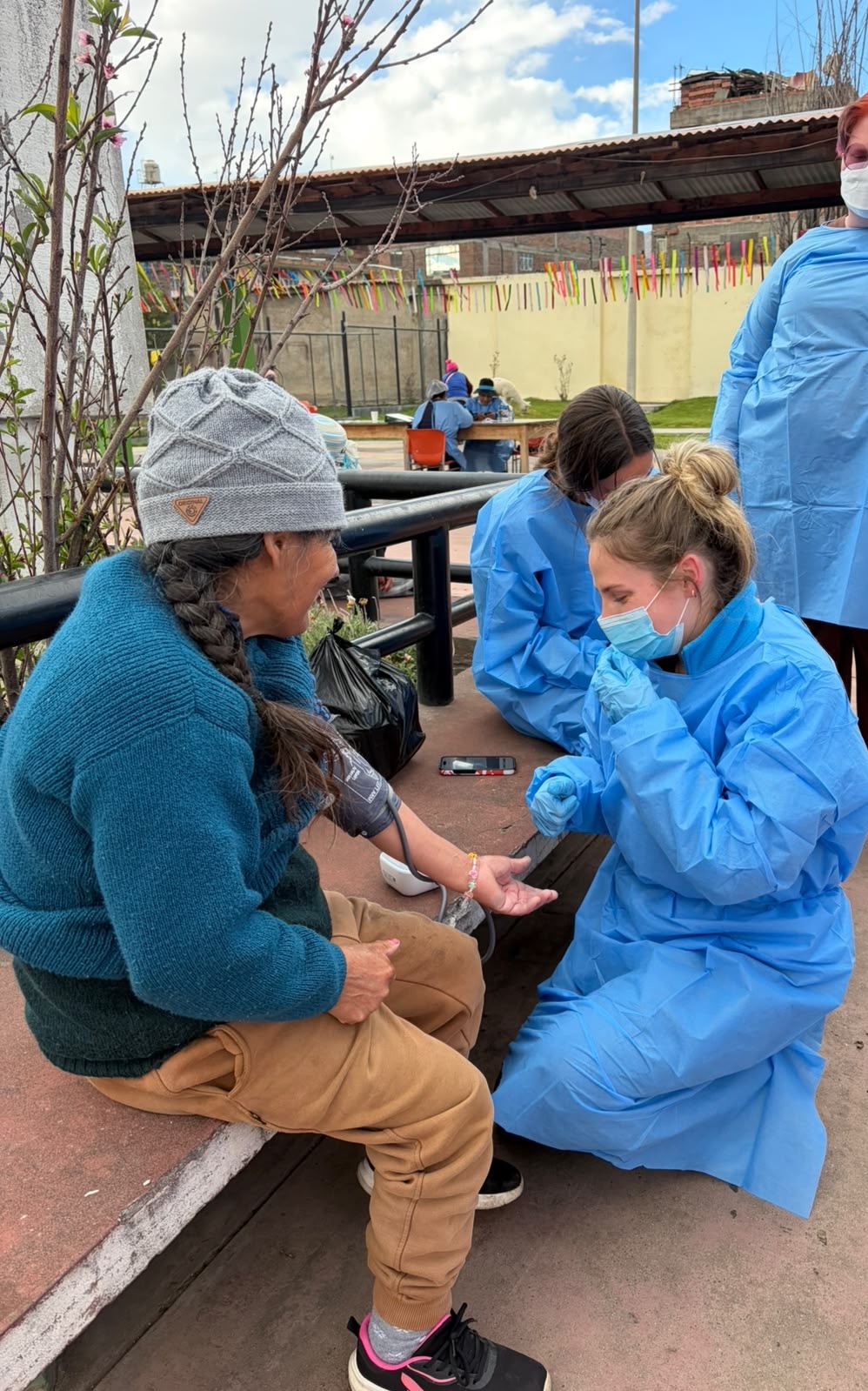
"The Peruvian healthcare system is so different from the United States healthcare system," she observes — not as a criticism, but as the kind of observation that only becomes possible when you have actually moved through both. During her four weeks with the SIHF, Victoria visited health posts and local clinics in underserved communities, moved through larger hospital facilities, and observed how healthcare providers at every level of the system navigate real patient care with resources and structures that bear little resemblance to what students in the United States are trained to expect.
This is one of the SIHF's most deliberate design elements. Fellows do not visit a single facility and call it global health. They move through the system — from the community health post to the regional hospital — understanding how each level functions, how patients flow between them, and where the gaps in that flow create the health disparities that community health programs exist to address.
The Operating Room That Stayed With Her
Of all the clinical experiences Victoria had during her four weeks, one stands out.
"We got to shadow and observe Peruvian surgeons and see many different procedures, which I thought was extremely fascinating and I learned so much from," she says.
That access to a functioning operating room, to surgeons willing to teach, to procedures that a 19-year-old student from California would not encounter anywhere near this early in her academic path, is not accidental. FIMRC's relationships with local healthcare institutions in Huancayo open doors that a standard classroom or clinical rotation simply cannot.
For Victoria, standing in that operating room was not just a fascinating experience. It was a reframe of what healthcare can look like when the people delivering it are deeply committed to their community, regardless of the infrastructure around them.
Homestay Life: Living With a Peruvian Family During the Fellowship
Clinical immersion is one half of the SIHF experience. The other half happens at the dinner table.
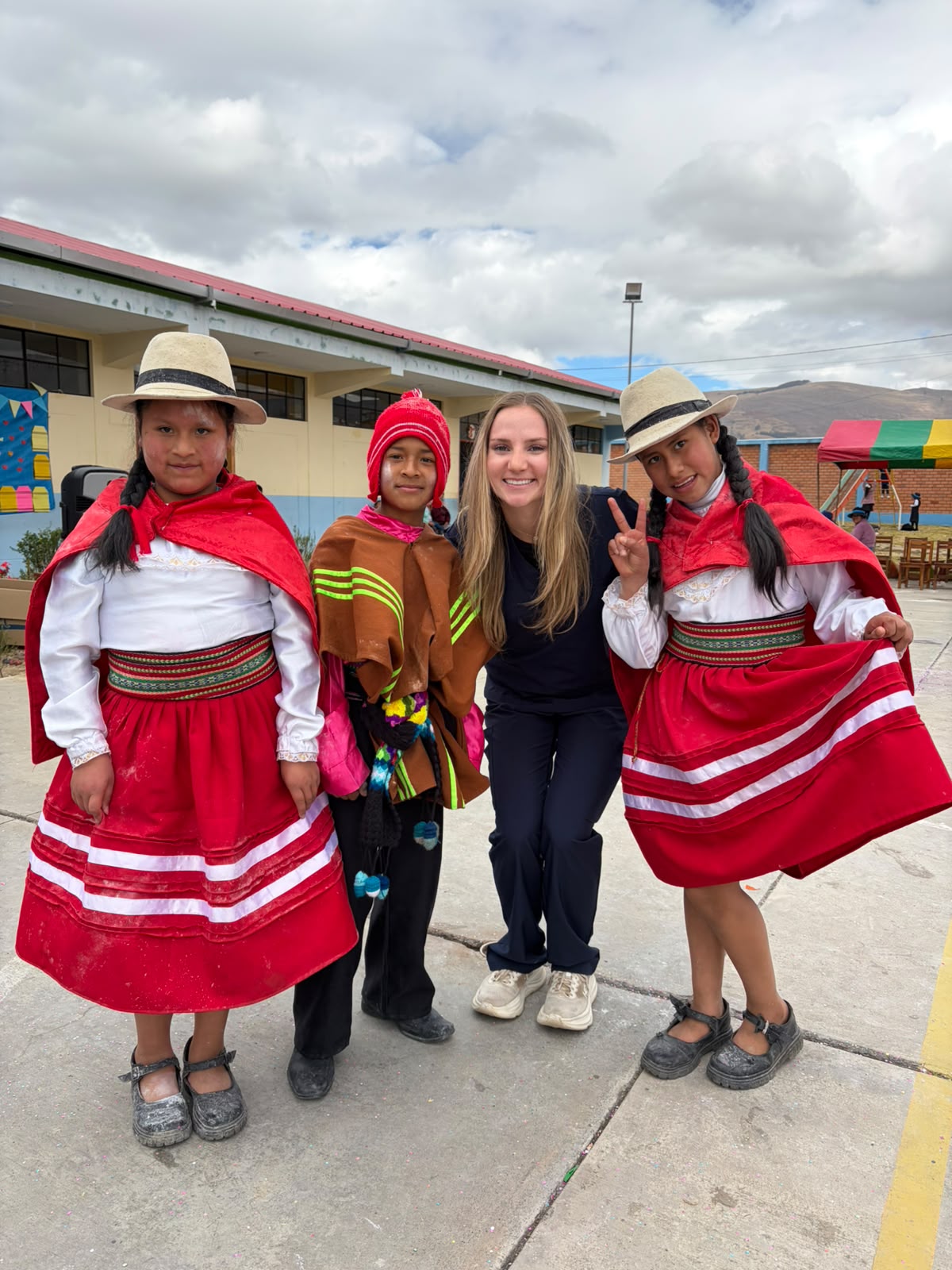
Victoria stayed with a Peruvian family during her four weeks — eating traditional dishes, learning about Peruvian culture, and experiencing firsthand the generosity that defines so many volunteers' memories of Huancayo.
"Everyone here has been so welcoming and I've had such an incredible experience," she says. And it shows — not just in the warmth of her reflection, but in the understanding she carries back about how culture and community shape the way healthcare is delivered and received.
A volunteer who has only seen the inside of a clinic understands the system. A volunteer who has also shared meals with a Peruvian family, who has learned even a small piece of the cultural context in which that system operates, understands the people. That distinction is what the SIHF is designed to produce.
What Four Weeks Actually Builds
Victoria is 19. She has four weeks of experience in global health. And she already understands something that takes many healthcare professionals years to articulate: that what you gain from an experience like this is not just clinical knowledge, but perspective.
Perspective on what healthcare looks like when resources are scarce and commitment is not. Perspective on what a family's trust means when a volunteer shows up consistently and respectfully. Perspective on the gap between the health system she grew up inside and the one she spent a month learning to navigate.
"I had the most incredible time," she says.
But the most important thing she took home was not the memory of the experience. It was the lens through which she will see every future patient, every clinical rotation, and every conversation about what healthcare is for.
Your Four Weeks Are Waiting
FIMRC's Summer International Health Fellowship in Peru is a four-week, curriculum-driven immersion into global health — designed for students who want more than observation hours and more than a line on a resume.
If you are ready to learn from local healthcare professionals, engage with communities that will stay with you, and see a healthcare system from the inside out, this fellowship is where that begins.
FAQ SECTION
What is FIMRC's Summer International Health Fellowship in Peru?
The SIHF is a four-week, curriculum-driven global health fellowship based in Huancayo, Peru. Fellows work alongside local healthcare professionals across multiple levels of the health system — from community health posts to regional hospitals — while living with host families and engaging with the local community. The program is designed for students seeking structured, immersive global health experience beyond passive observation.
What clinical experiences do SIHF fellows have in Huancayo?
Fellows visit and work in health posts, community clinics, and larger hospital facilities, shadowing Peruvian healthcare providers across a range of specialties. Experiences vary but can include surgical observation, community health campaigns, maternal and child health outreach, and exposure to the referral pathways that connect community-level care to hospital-based treatment.
What is a homestay and why is it part of the SIHF experience?
Homestays place fellows with local Peruvian families for the duration of the fellowship. Beyond providing accommodation, they are a deliberate part of the program's design — giving fellows direct exposure to Peruvian culture, food, language, and daily life. Understanding the cultural context in which healthcare is delivered and received is considered as important as the clinical experience itself.
How does the Peruvian healthcare system differ from the U.S. system?
Peru's healthcare system operates across public, semi-public, and private sectors, with significant disparities between urban and rural access. Community health posts and local clinics serve as the primary point of contact for rural populations, often with limited staffing and resources. For students trained within the U.S. system, observing how Peruvian providers deliver high-quality, patient-centered care within these constraints is one of the most formative aspects of the fellowship.
Who is the SIHF designed for?
The SIHF is designed for pre-health students, public health majors, nursing students, and early-career healthcare professionals who want structured, supervised global health experience. No prior clinical experience is required. What the program requires is curiosity, cultural humility, and a genuine interest in understanding healthcare from a global perspective.
Want your questions on volunteering abroad answered quicker? Book a quick call with our team!
Stay connected with news and updates!
Join our mailing list to receive the latest news and updates from our team.
Don't worry, your information will not be shared.
We hate SPAM. We will never sell your information, for any reason.
