
Preventing Child Malnutrition in Ecuador Through Community Partnerships
Jul 17, 2026In Anconcito, Ecuador, chronic child malnutrition is not a statistic that lives in a report.
It shows up in a child's height at a routine screening. In the results of a cognitive assessment. In the long arc of a life shaped, before the age of five, by what the body did not receive when it needed it most.
Chronic malnutrition does not announce itself dramatically. It accumulates quietly, stunting growth, limiting brain development, narrowing the window of opportunity that childhood is supposed to represent. And it is almost entirely preventable.
That is what makes it one of the most urgent and most frustrating public health challenges facing vulnerable communities across Latin America. The solutions are known. What requires work is building the systems, the relationships, and the sustained commitment to deliver them.
FIMRC Ecuador recently took a concrete step toward exactly that.
A Room Full of the Right People
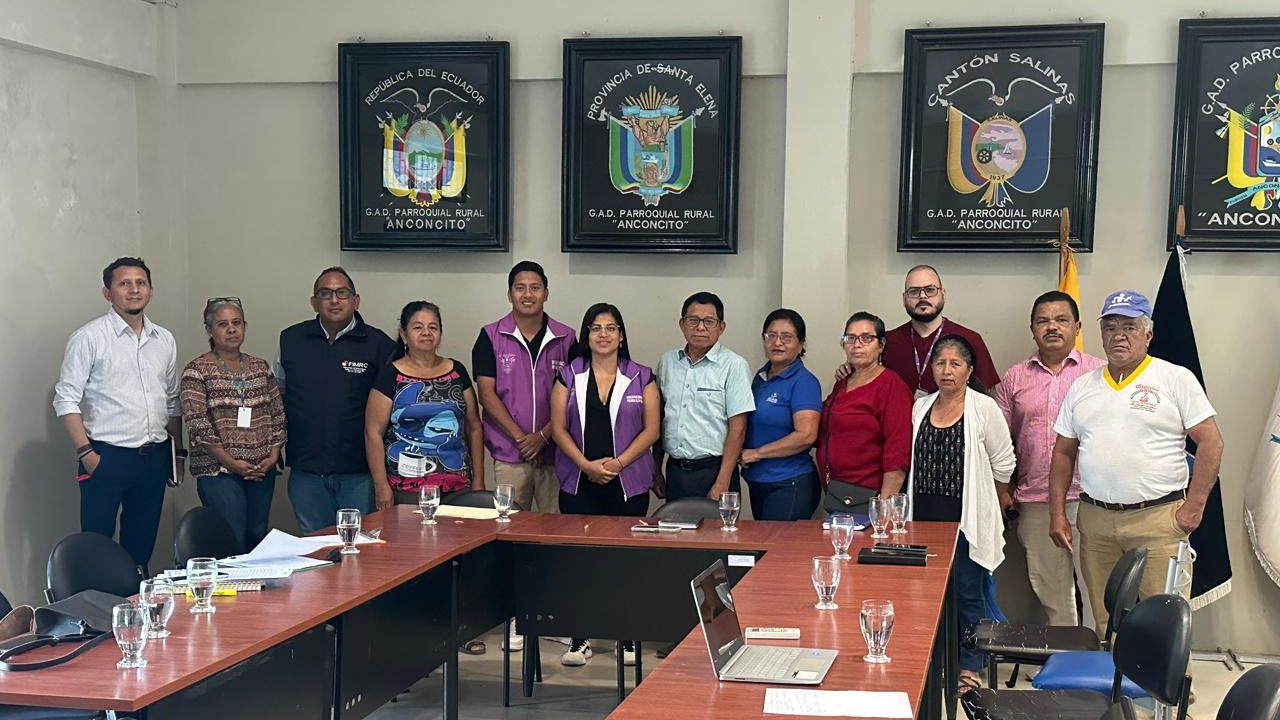
Before planning a health fair, FIMRC Ecuador did something that is often skipped in community health programming: it called a meeting.
Not a briefing. Not a top-down announcement. A genuine coordination space that brought together representatives from local health institutions, government agencies, and community organizations, all focused on one shared objective: designing a Community Health Fair that would actually serve the families of Anconcito.
What emerged from that meeting mattered more than the event it produced.
Participating institutions aligned their objectives. They defined roles and responsibilities. They identified where their resources and expertise could complement each other — and where duplication of services had previously left gaps in care. They had the kinds of conversations that only happen when the right people are in the same room, willing to listen before they plan.
This is what interinstitutional collaboration looks like in practice. And it is far rarer than it should be.
Why a Health Fair Is Not Enough — and Why This One Might Be Different
A single health event, however well-organized, cannot solve chronic malnutrition.
The families of Anconcito do not need one afternoon of information. They need sustained access to nutritional monitoring, early detection, family education, and health services that do not disappear when the tent comes down. Sustainable solutions are built through strong partnerships, not isolated interventions.
What made this planning process significant is that it was designed with that reality in mind. The goal was never just a health fair. It was a coordinated strategy — one where institutions avoid duplicating services, families receive comprehensive support, and the relationships built between organizations outlast any single event.
The upcoming Community Health Fair will provide educational activities, health promotion services, and practical information for parents and caregivers on preventing chronic child malnutrition. But the infrastructure behind it — the trust, the coordination, the shared accountability, is the part that creates lasting impact.
What Chronic Malnutrition Actually Costs
The consequences of chronic malnutrition extend far beyond physical growth.
Children who experience stunting in their early years face measurable setbacks in cognitive development and academic performance. Those setbacks compound over time — shaping not just individual futures, but the economic and social trajectory of entire communities. Preventing malnutrition is not just a health intervention. It is an investment in the future capacity of a generation.
In communities like Anconcito, where access to health services and nutritional education has historically been uneven, the stakes of getting this right are significant.
FIMRC Ecuador's Commitment to Anconcito
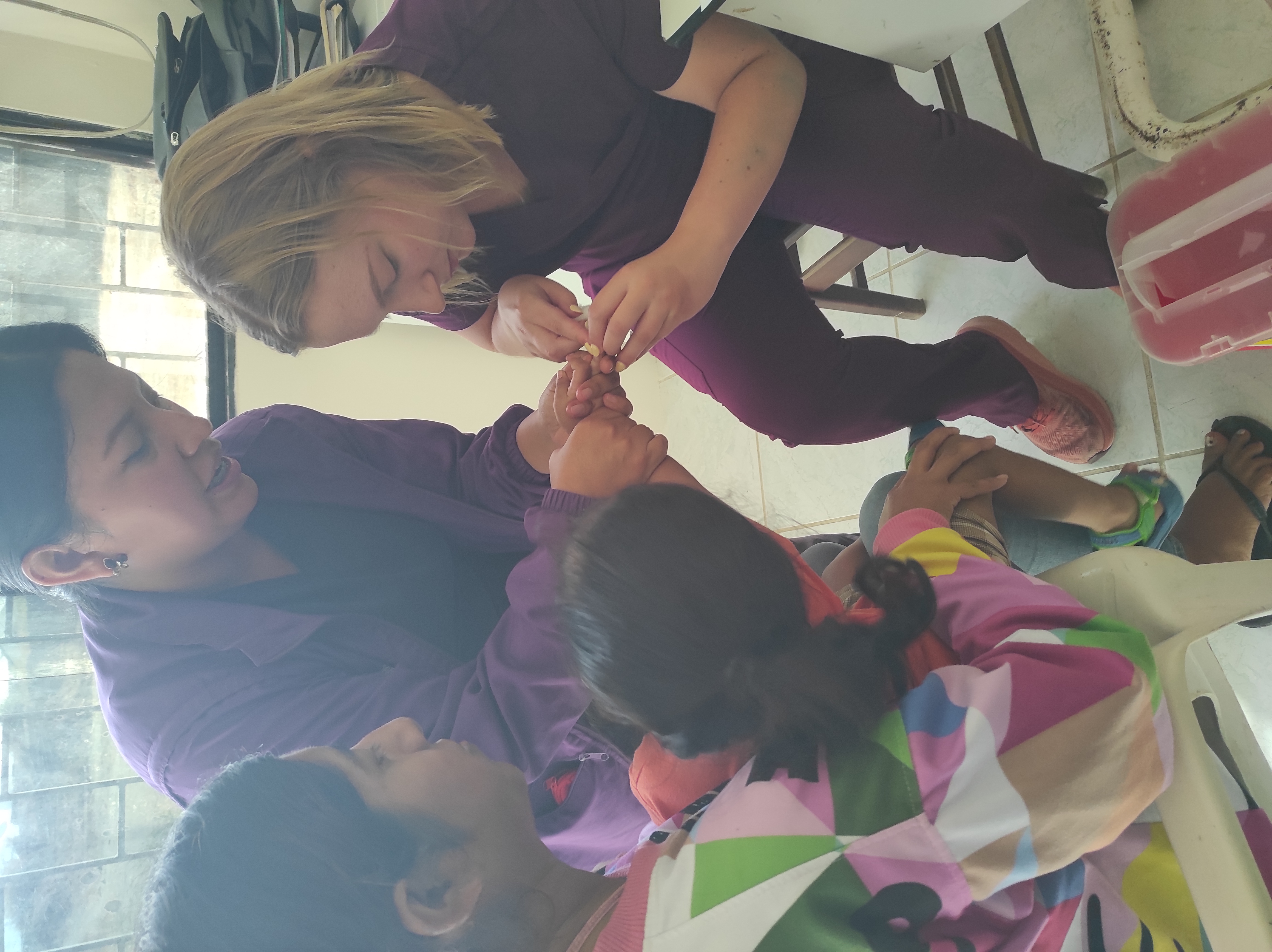
This initiative is one expression of FIMRC Ecuador's broader approach to community health: building programs that are sustainable because they are locally owned, and locally owned because they are built through genuine partnership.
FIMRC does not arrive with a predetermined solution. It arrives as a convener, a collaborator, and a long-term partner — one that recognizes that the institutions, families, and health workers already present in a community are the foundation of any real change.
By creating spaces for collaboration, strengthening interinstitutional relationships, and supporting the coordination of resources that already exist within the community, FIMRC Ecuador is working toward something more durable than a health event.
It is working toward a healthier Anconcito.
Be Part of the Work
What happened in that coordination meeting in Anconcito is a small example of what meaningful community health work looks like: patient, relational, and built on the understanding that sustainable change requires everyone around the table.
FIMRC's Global Health Volunteer Program places students and healthcare professionals inside exactly this kind of work — across Peru, Costa Rica, and Ecuador — where the learning goes far beyond clinical skills and into the systems, relationships, and realities that shape community health.
If you are ready to be part of it, the door is open.
FAQ SECTION
What is chronic child malnutrition and why is it a priority in Ecuador?
Chronic child malnutrition, or stunting, occurs when children do not receive adequate nutrition during their critical early years, typically the first 1,000 days of life. Its consequences include impaired physical growth, reduced cognitive development, and lower academic performance. In Ecuador, stunting rates remain elevated in vulnerable communities, making prevention a public health priority that requires coordinated, sustained action across health, education, and social sectors.
What is a Community Health Fair and how does FIMRC Ecuador organize them?
A Community Health Fair is a community-based event that brings together health promotion services, educational activities, and direct support for families in a single accessible space. FIMRC Ecuador organizes these fairs through interinstitutional coordination, convening local health institutions, government agencies, and community organizations to align objectives, define roles, and ensure families receive comprehensive, non-duplicated support.
Why is interinstitutional collaboration important in community health?
Collaboration between institutions prevents duplication of services, maximizes limited resources, and ensures that families receive coordinated rather than fragmented care. When health organizations, government agencies, and community groups align their efforts around shared goals, the impact of any single initiative is significantly greater, and the relationships built between institutions create infrastructure for long-term program sustainability.
What role do FIMRC volunteers play in community health initiatives like this one?
FIMRC volunteers work alongside local health teams in community settings, supporting health education campaigns, outreach activities, and preventive care initiatives. In Ecuador, volunteers contribute to programs that address child nutrition, maternal health, and preventive care, gaining firsthand experience in how community health systems function and how sustainable change is built through local partnership.
How does addressing child malnutrition connect to global health volunteering?
Child malnutrition is one of the most significant and preventable public health challenges in low-resource communities. For students training in medicine, nursing, or public health, understanding the social, economic, and systemic factors that drive malnutrition, and working within the community-based programs designed to address it, is essential preparation for careers in global health.
Want your questions on volunteering abroad answered quicker? Book a quick call with our team!
Stay connected with news and updates!
Join our mailing list to receive the latest news and updates from our team.
Don't worry, your information will not be shared.
We hate SPAM. We will never sell your information, for any reason.
