
International Youth Day 2026: Different Contexts, Common Aspirations Among the World's Young People
Aug 14, 2026There are roughly 1.2 billion young people between the ages of 15 and 24 living in the world today. Despite growing up in wildly different national, economic, and cultural circumstances, their underlying goals tend to be the same: dignity, real opportunity, meaningful participation, and a future worth building.
That is the premise behind International Youth Day 2026, observed every August 12 under the UN theme Different Contexts, Common Aspirations — an acknowledgment that while young people's realities may differ profoundly, what they want from life is, at its core, remarkably similar.
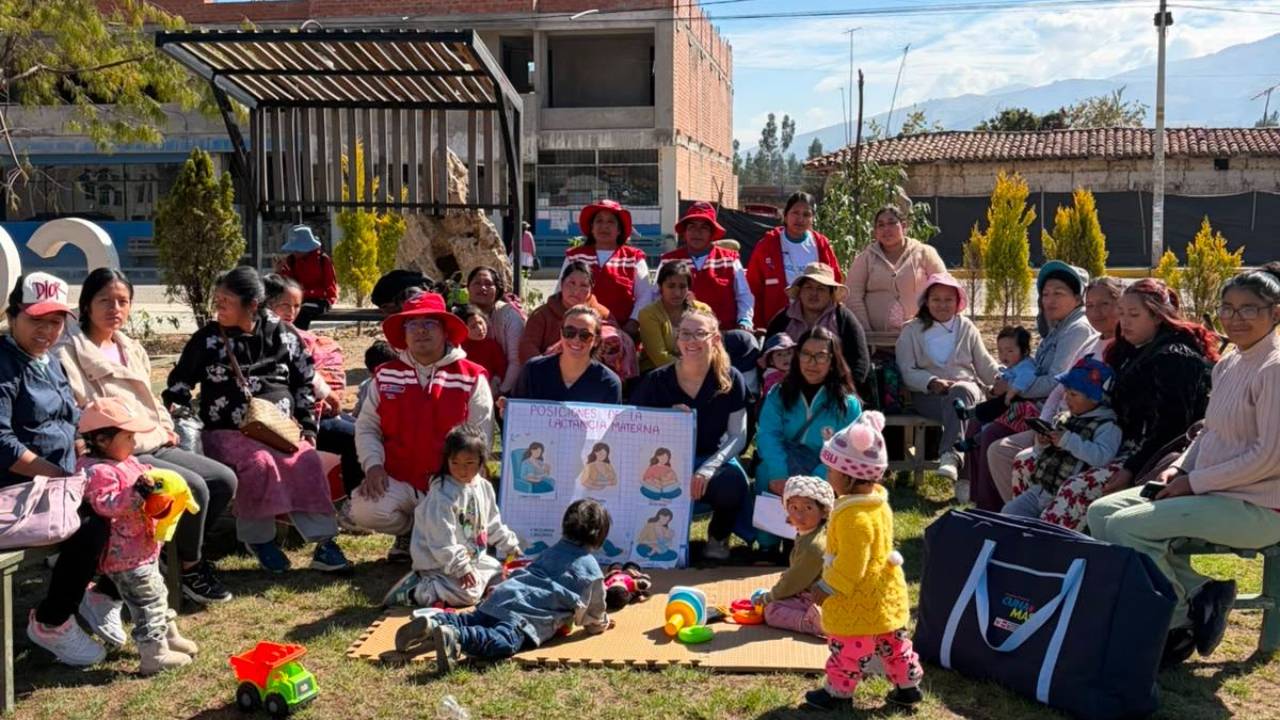
For FIMRC volunteers — most of them young healthcare students themselves — this theme does not live in a UN report. It lives in the clinics, the communities, and the conversations they have in Huancayo, Costa Rica, and Ecuador.
Two Young People. Two Very Different Starting Points.
Consider two people, both twenty-two years old, both interested in health.
One is a pre-med student in New York, preparing for the MCAT, navigating a healthcare system she has studied in textbooks and observed in hospital rotations. She has access to libraries, simulation labs, and mentors. Her path to becoming a physician, while demanding, is visible.
The other is a young woman in a rural community outside Huancayo, Peru. She has seen illness up close — in her family, in her neighbors — but the healthcare system that could train her or treat her is hours away. Her aspiration for a healthier life is identical. Her context is entirely different.
International Youth Day 2026 places particular attention on young people living in Least Developed Countries and communities facing the greatest barriers, emphasizing that recognizing different contexts should strengthen, not diminish, global solidarity.
FIMRC volunteers are a living expression of that solidarity. They are young people who have chosen to step out of their own context and into someone else's — not to fix it, but to understand it.
What Young Volunteers Find When They Arrive
Every FIMRC volunteer arrives with some version of the same expectation: that the differences will be the story.
Different resources. Different protocols. Different infrastructure. Different ways of delivering care.
Those differences are real. But what volunteers describe, again and again, when they return from Peru, Costa Rica, or Ecuador, is something they did not expect to find: the profound similarity between themselves and the young people they meet in the communities they serve.
A teenager in Anconcito, Ecuador who wants to become a nurse. A young father in Huancayo trying to understand his child's diagnosis. A student at the local medical university in Peru who performs traditional songs for visiting volunteers before walking them through the cadaver lab.
Different contexts. The same drive to learn, to contribute, to matter.
That recognition — that the aspiration is shared even when the circumstances are not — is one of the most formative things a young healthcare professional can carry into a career.
Youth Health Challenges Across FIMRC's Communities
The communities FIMRC serves in Peru, Costa Rica, and Ecuador face youth health challenges that are shaped directly by context.
- In the highland communities around Huancayo, adolescent anemia rates remain elevated, driven by nutrition gaps that compound over years and affect everything from academic performance to physical development.
- In Costa Rica and Ecuador, young people navigate health systems where urban-rural divides determine not just quality of care, but whether care is reachable at all.
- Across all three countries, young mothers face maternal health risks substantially higher than those faced by peers in high-income settings — not because of biology, but because of circumstance.
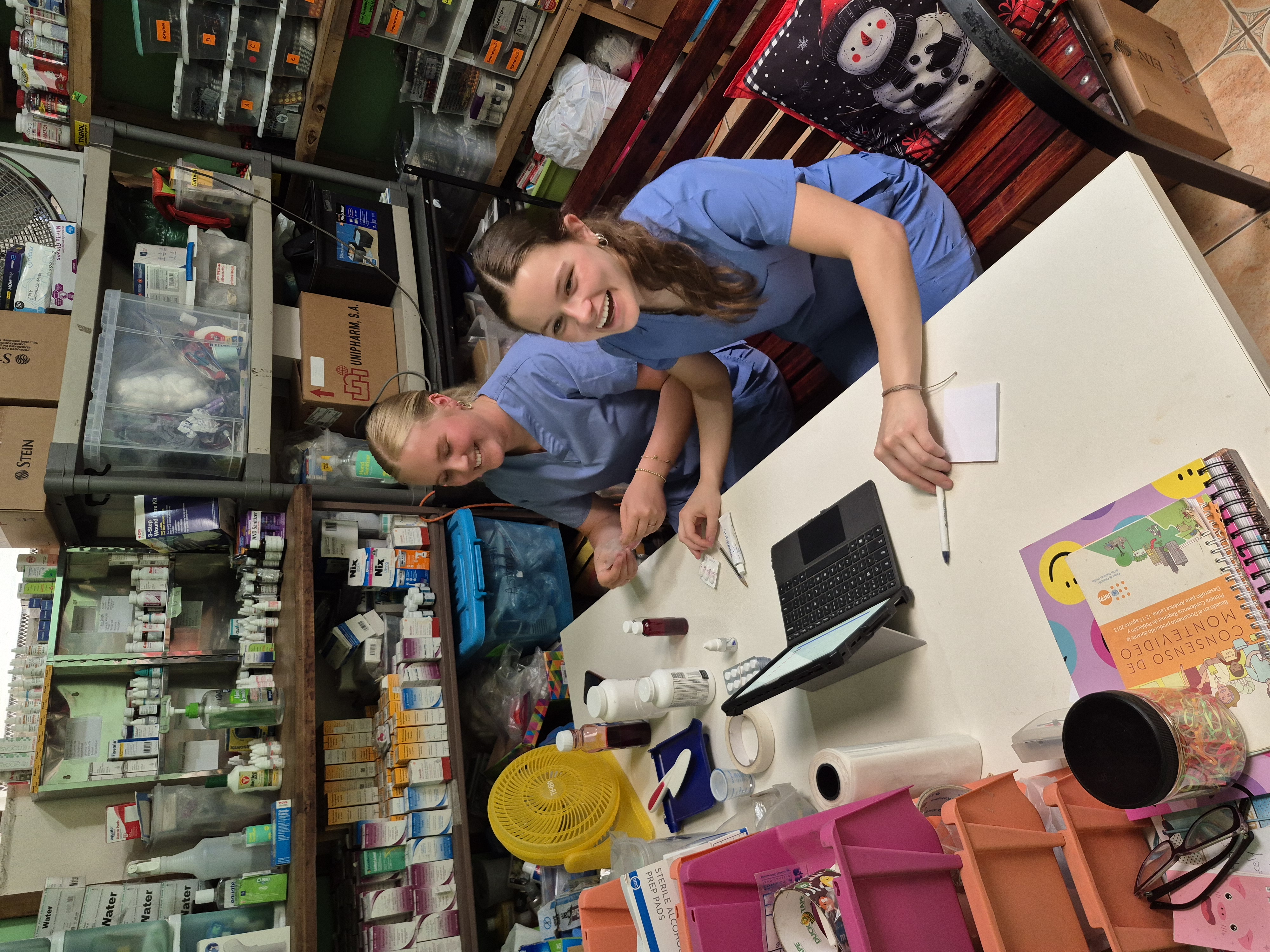
FIMRC's Global Health Volunteer Program (GHVP) places volunteers directly inside these communities, working alongside local healthcare teams on the initiatives that affect young people most directly:
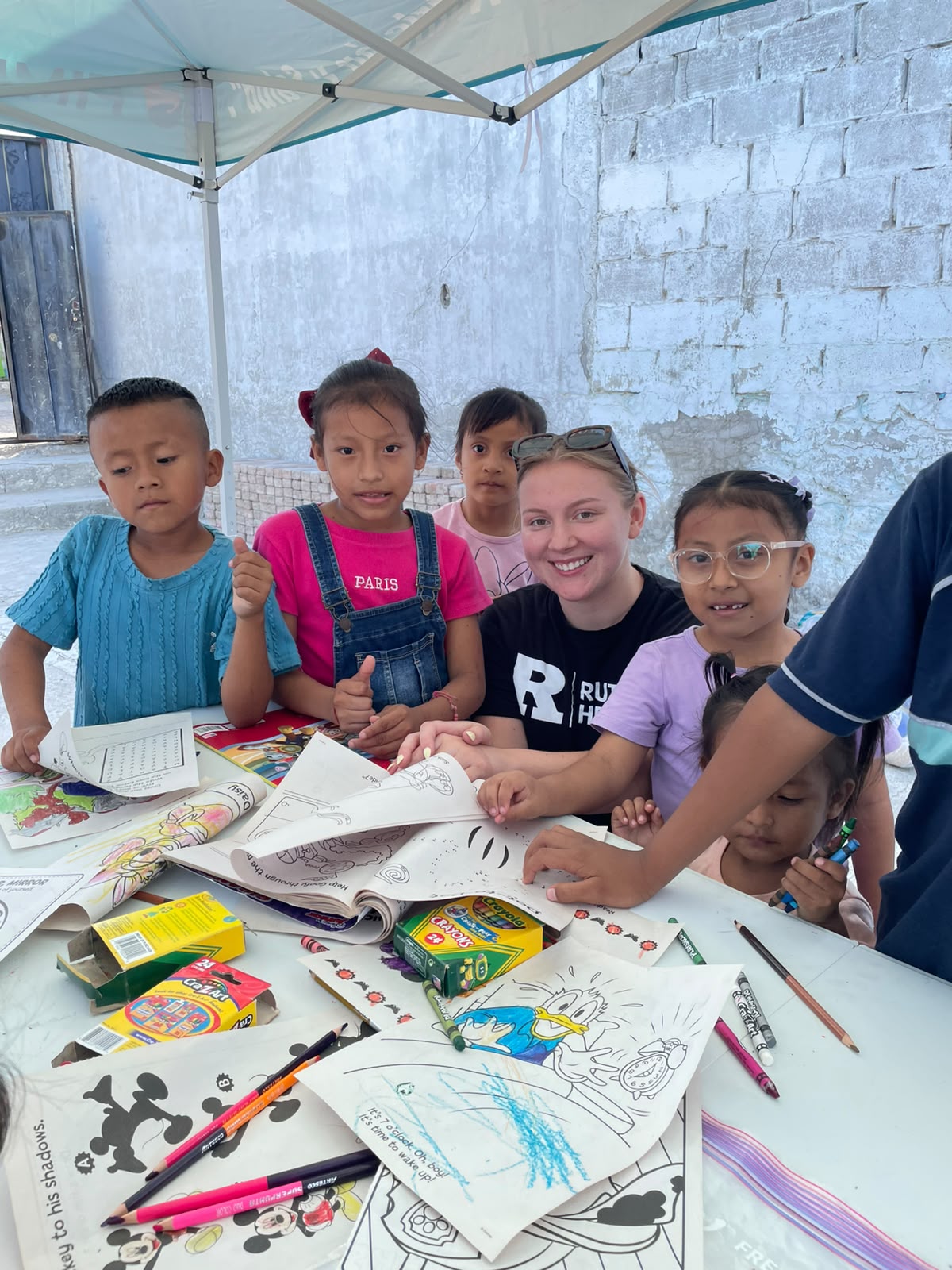
- Adolescent and child health education campaigns in schools and community centers
- Maternal and child health outreach that reaches young mothers before and after delivery
- Nutritional screening and monitoring of children and adolescents in high-risk areas
- Health education workshops addressing the social and environmental determinants shaping youth health outcomes
- Community outreach in neighborhoods where young people have the least reliable access to preventive care
Service as a Form of Aspiration
There is something worth naming about the volunteers themselves.
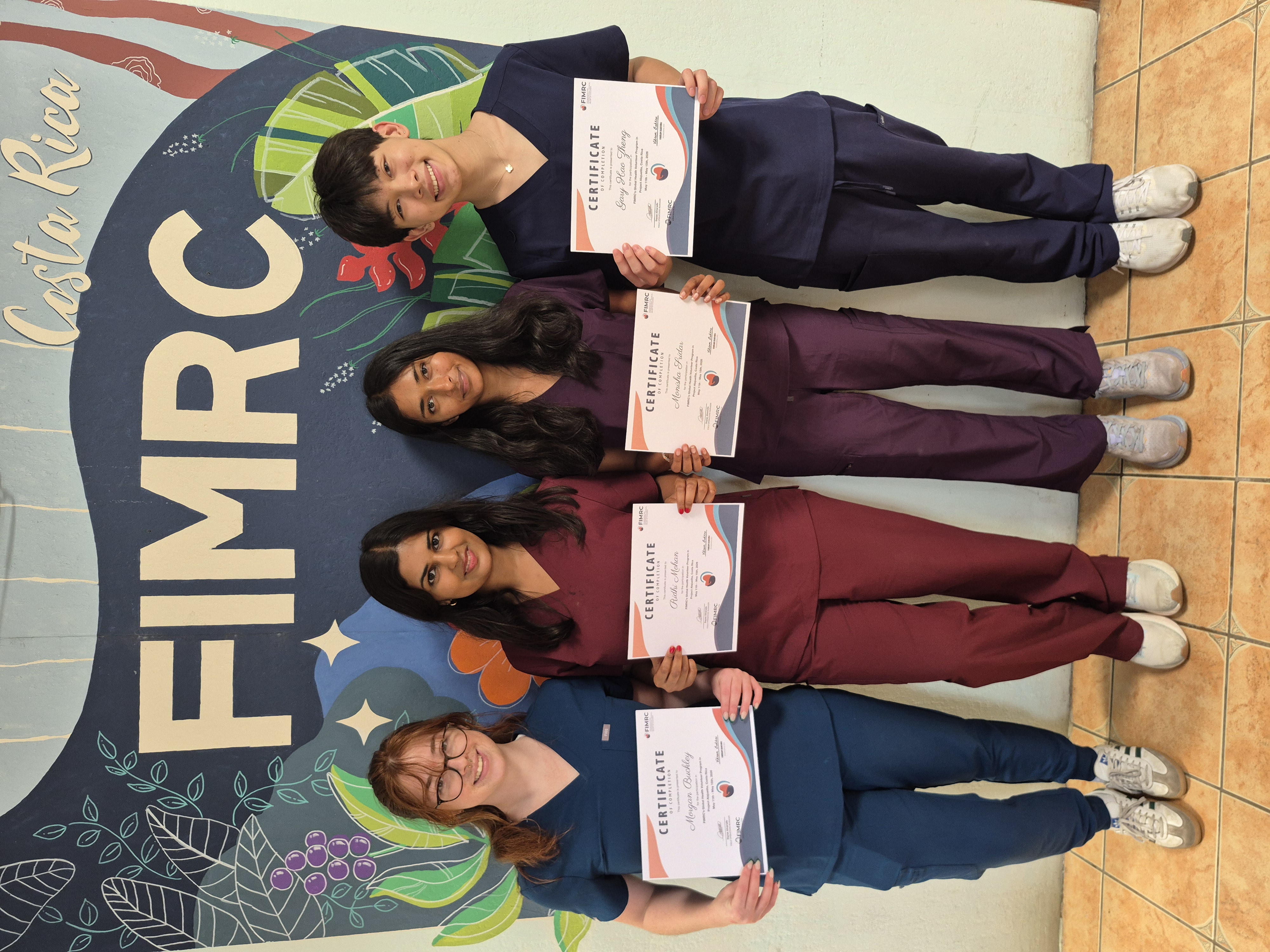
The pre-med, nursing, and public health students who choose to volunteer with FIMRC are not doing so because it is easy. Many of them — like Nina Paoliello, a single mother and nursing student from New York who volunteered in Huancayo — are fitting an international experience around real-life constraints: school schedules, work, family obligations, financial limits.
They go anyway. Because the aspiration to understand healthcare at a global level — to become the kind of clinician who has seen what care looks like when resources are scarce, to build the cultural humility that no simulation lab can teach — is stronger than the inconvenience of pursuing it.
This year's theme emphasizes that investing in youth everywhere, and supporting those facing the greatest barriers, is how the international community ensures that no young person is left behind.
Volunteering with FIMRC is one way to invest both in the communities being served and in the kind of healthcare professional the volunteer is becoming.
Different Contexts. One Conversation Worth Having.
International Youth Day asks the world to recognize what young people share across the lines that divide them.
FIMRC volunteers do not just recognize it. They go and experience it — in clinics, in classrooms, in homes, and in the unexpected moments that stay with them long after they return.
If you are a young healthcare student ready to understand global health from the inside — and to discover what you have in common with the communities you serve — this is where that conversation begins.
See volunteer opportunities in Peru, Costa Rica & Ecuador.
FAQ SECTION
What is International Youth Day 2026 and what is its theme?
International Youth Day is observed every August 12 by the United Nations to raise awareness of the challenges and opportunities facing young people globally. The 2026 theme, Different Contexts, Common Aspirations, highlights that despite vastly different social, economic, and geographic realities, young people around the world share the same core aspirations: dignity, opportunity, meaningful participation, and a sustainable future.
Why is youth health a priority in the communities FIMRC serves?
In Peru, Costa Rica, and Ecuador, young people face health challenges shaped directly by context — including elevated rates of adolescent anemia, limited access to preventive care in rural areas, and maternal health risks for young mothers that far exceed those in high-income settings. Addressing these disparities requires sustained community health work that reaches young people where systemic healthcare cannot.
How does volunteering with FIMRC contribute to youth health in low-resource communities?
FIMRC's GHVP places volunteers alongside local healthcare teams working on adolescent and child health education, maternal and child health outreach, nutritional monitoring, and community health campaigns. By supporting these initiatives in Peru, Costa Rica, and Ecuador, volunteers contribute directly to the health outcomes of the young people most affected by systemic inequality.
What do young healthcare students gain from volunteering internationally with FIMRC?
Volunteers develop clinical adaptability, cultural humility, and systems-level thinking that classroom training cannot replicate. They gain direct exposure to healthcare delivery in low-resource settings, build relationships with local healthcare professionals, and return with a clearer, more grounded understanding of what global health actually requires — personally and professionally.
Is FIMRC's volunteer program suitable for students early in their healthcare training?
Yes. FIMRC's GHVP welcomes students at all stages of their training, from first-year undergraduates to students in clinical programs. Volunteers work in supervised community health settings alongside local professionals, making the experience accessible and valuable regardless of prior clinical experience.
Want your questions on volunteering abroad answered quicker? Book a quick call with our team!
Stay connected with news and updates!
Join our mailing list to receive the latest news and updates from our team.
Don't worry, your information will not be shared.
We hate SPAM. We will never sell your information, for any reason.
